
Core track parts stocked
We carry torsion springs sized to common door weights, steel rollers in sealed and unsealed bearing styles, track sections, end bearing plates, and the cables that run the drums.
Bunker Hill Village, Richmond
Richmond Garage Door Pros fixes off-track doors in Bunker Hill Village, where homes date to 1993, not Richmond's older stock, 19 miles from our Richmond base.
The repair
Richmond's service area as a whole has houses going back to 1972, with the bulk of the stock reading 1987 on the permit record. Bunker Hill Village runs newer than that - most of these houses went up around 1993, a handful of years later than the Richmond median.
That gap matters on an off-track call. A door that's off its track in 1993 construction is almost always riding steel rollers in a galvanized track that was installed to a slightly different spec than the older doors we see closer to Richmond proper.
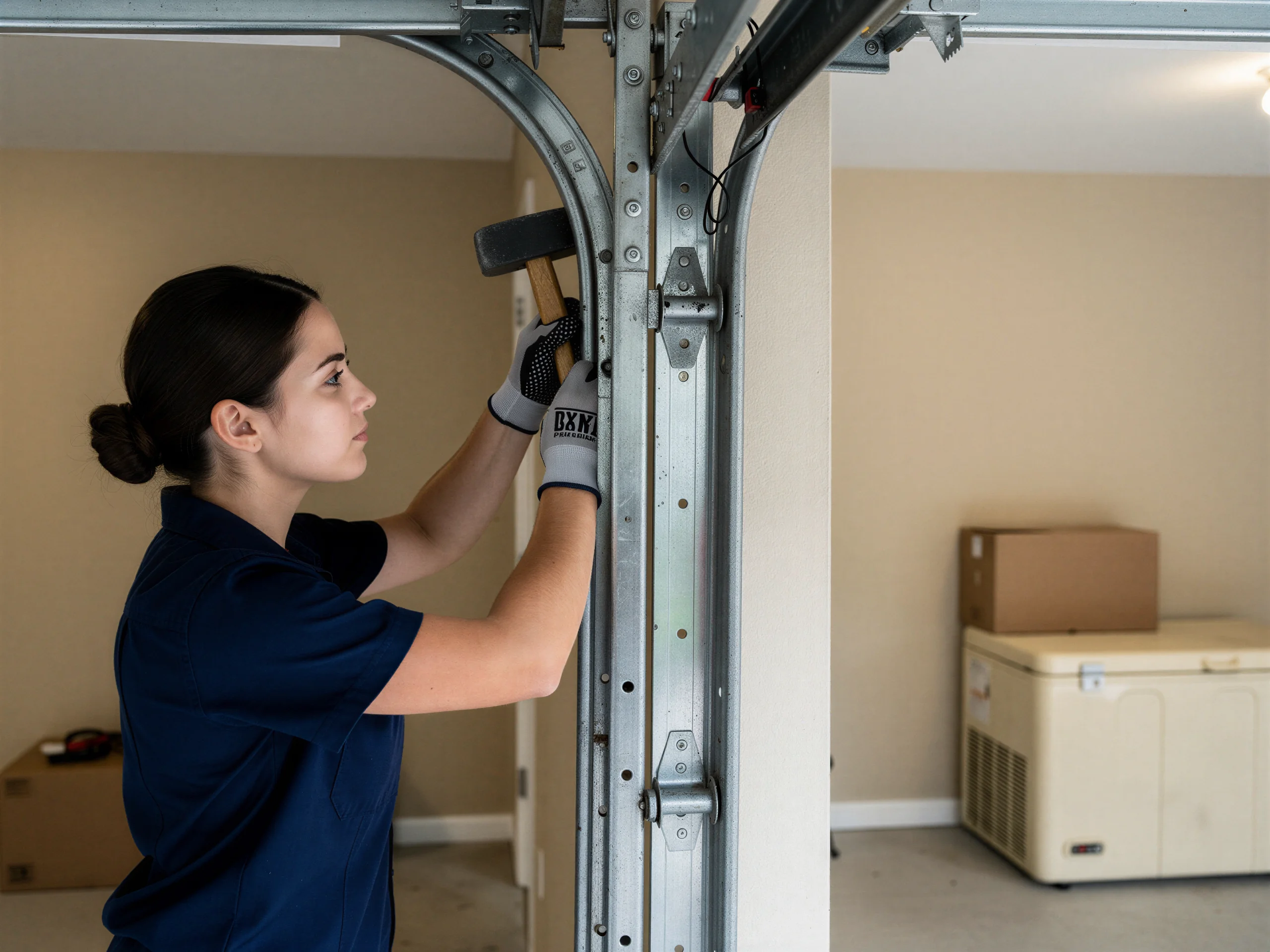
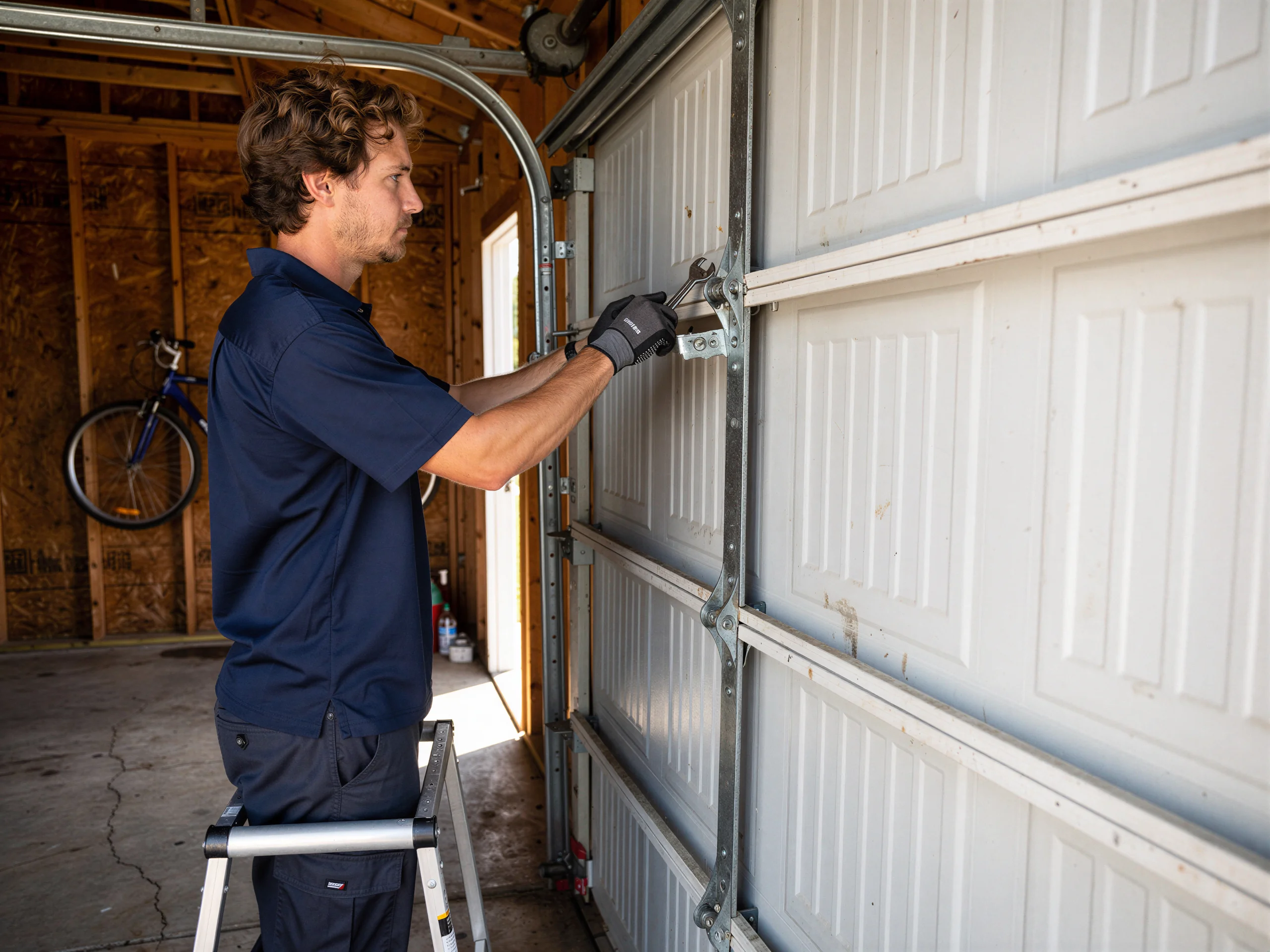
The fix starts the same way everywhere: we find out why the door left the track before we put it back. Nine times out of ten a roller has worn through its bearing, a track bracket has worked loose from the jamb, or a cable has jumped its drum and let one side of the door drop.
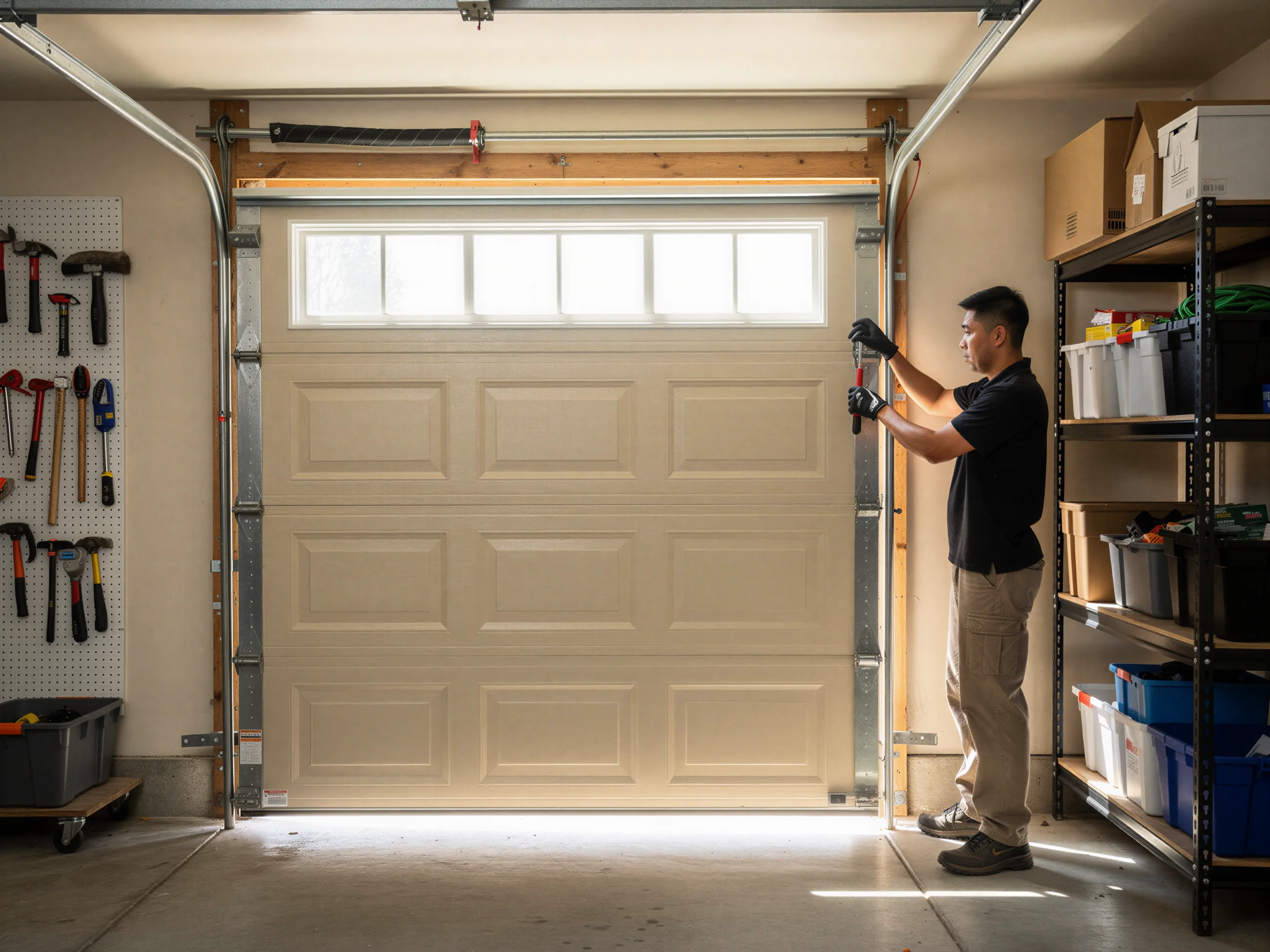
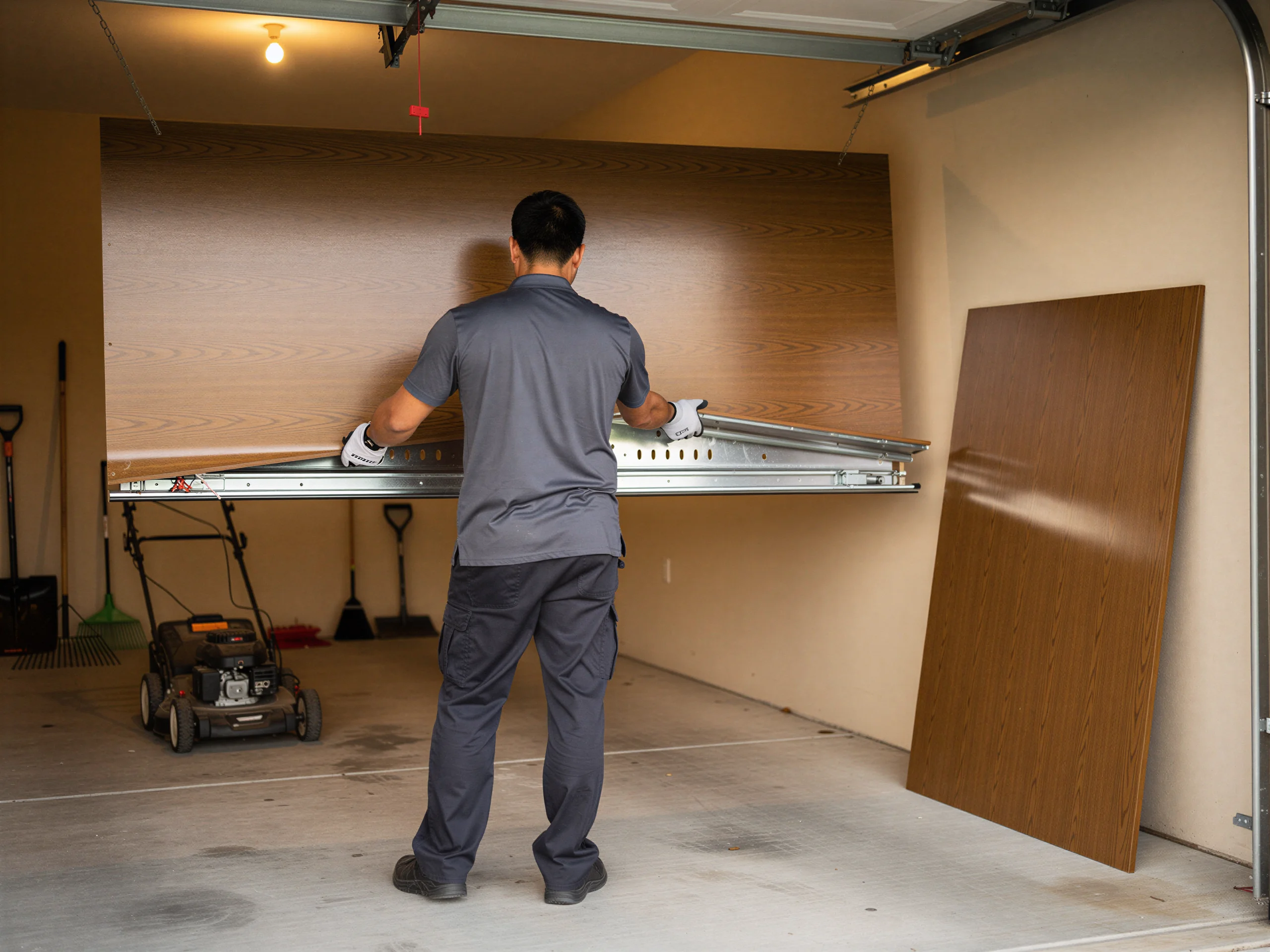
We re-seat the panel, true up the track with a level, replace whatever failed, and run the door through a full open-close cycle before we call it done. We're driving the 19 miles out from Richmond for this one, so we bring what the job needs on the truck rather than guessing and coming back.
On the truck
For a 1993-era door, we're usually looking at torsion spring setups rather than the older extension-spring doors you'll find on houses built before the 1980s swept through.
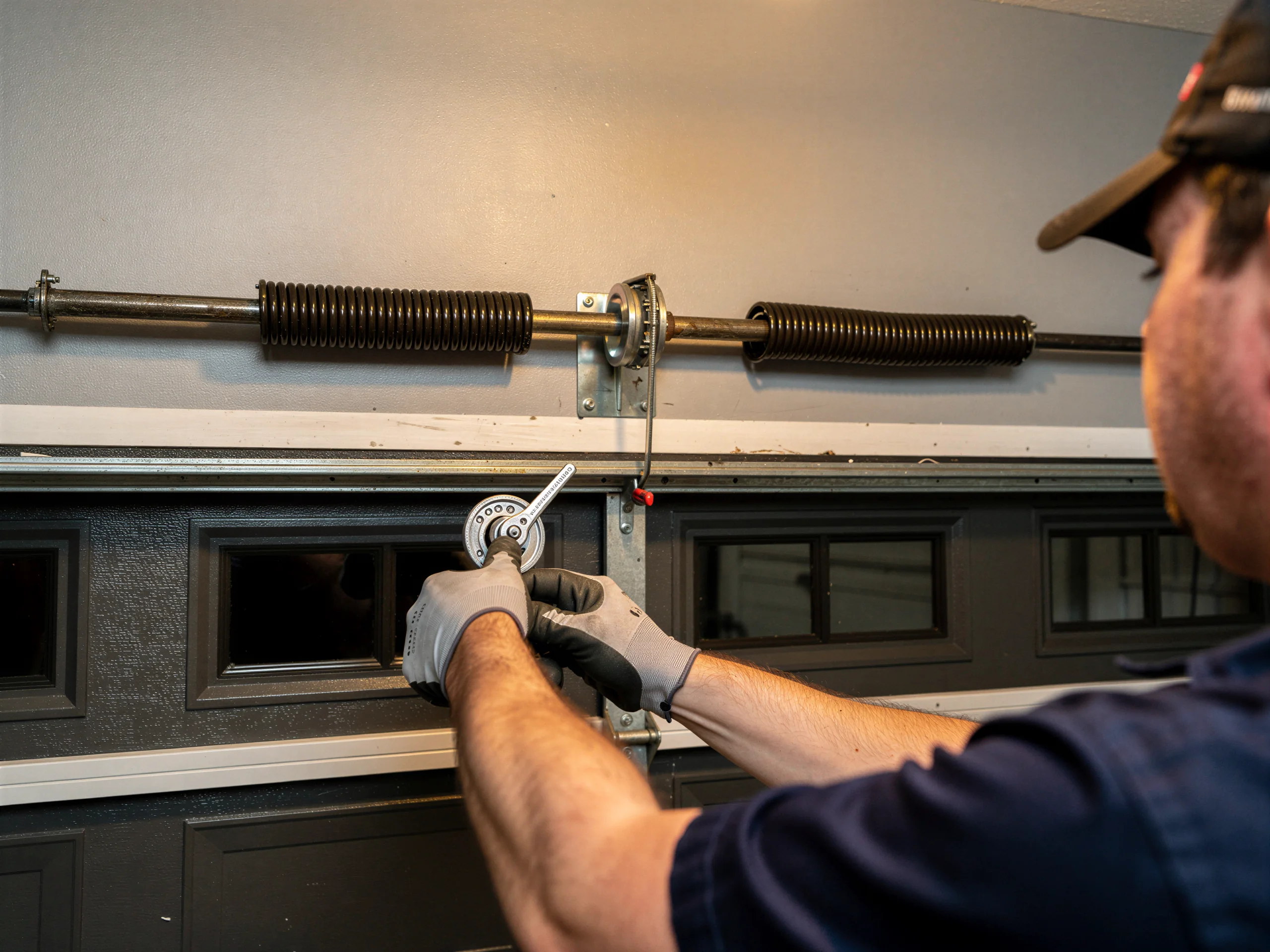
We carry torsion springs sized to common door weights, steel rollers in sealed and unsealed bearing styles, track sections, end bearing plates, and the cables that run the drums.
Hinges and roller brackets wear out together on doors this age, so we stock both rather than replacing one and leaving the other to fail next year. What we don't carry on the truck is anything custom - a specialty insulated panel or a non-standard track width ordered for a particular build.
If your door turns out to need one of those, we'll tell you straight that it's a special-order part and give you a timeline before we commit to the job, not after.
Watch-outs
The most common way a door comes off track out here is a bent section of track - usually from something backing into it, or from a bracket that's loosened over three decades of the door running against it.
Once the track is out of true by even a little, the rollers bind, climb the rail, and the door walks sideways out of its channel. The second pattern is cable failure on one side: the door drops unevenly, the panel racks, and a roller pops loose from the track edge.
On a few calls the door looks off-track but the real problem is a broken torsion spring that let the opener drag the door crooked - we check the spring before we touch the track, because re-tracking a door with a dead spring just breaks it again.
With a median household income well above the regional figure in this area, we also see more doors with upgraded hardware and heavier insulated panels, which puts more load on rollers and brackets that were never swapped out after the original install.
Pricing
We don't have a flat number to quote here, and we're not going to make one up. What drives the cost on an off-track job is whether it's a roller-and-bracket fix or a bent track that needs full section replacement, and whether a spring failed alongside it. A straightforward re-track with a couple of new rollers is a quick job. A bent track on a heavier insulated door, or a job where the cable and one of the hinges need replacing too, runs longer and costs more in parts. We'll look at the door, tell you what's actually broken, and price the parts and labor before we start - not after. If the track is bent badly enough that it's going to keep failing, we'll say so rather than patch it and have you call us back in six months.
DIY or pro
A door that's hanging crooked or sitting half off its track is under spring tension, and that tension doesn't care whether you know what you're doing. We don't recommend homeowners re-track a door themselves, especially on a torsion-spring setup like most of what's out here, where a mis-handled spring can put a cable or a chunk of hardware across the garage at speed. Where a homeowner can reasonably help themselves: checking whether the opener's travel limits or force settings are the actual cause before assuming the hardware is at fault, and clearing the track of any obvious obstruction before calling. Beyond that, this is a call-a-pro job. We'd rather talk you through what to check over the phone than have you on a ladder next to a loaded spring.
Questions
On houses from the early 1990s, it's usually wear, not impact - a roller bearing finally gives out, or a bracket that's held the track for thirty years works loose. We check both before assuming something hit the door.
No, we run out of Richmond and drive the 19 miles to reach Bunker Hill Village. We bring the parts we expect to need for the job based on what you describe on the call.
Not always. A mild bend in one section can sometimes be straightened and re-hung. Once the rail is kinked enough that rollers keep climbing out, replacing that section is the more reliable fix.
Usually, yes - the opener and the track are separate systems. We run a full cycle test after the repair to confirm the opener's travel and force settings still match the door before we leave.
Explore more
Ready when you are
Richmond Garage Door Pros repairs and installs garage doors, springs and openers in Richmond, TX and the surrounding area.