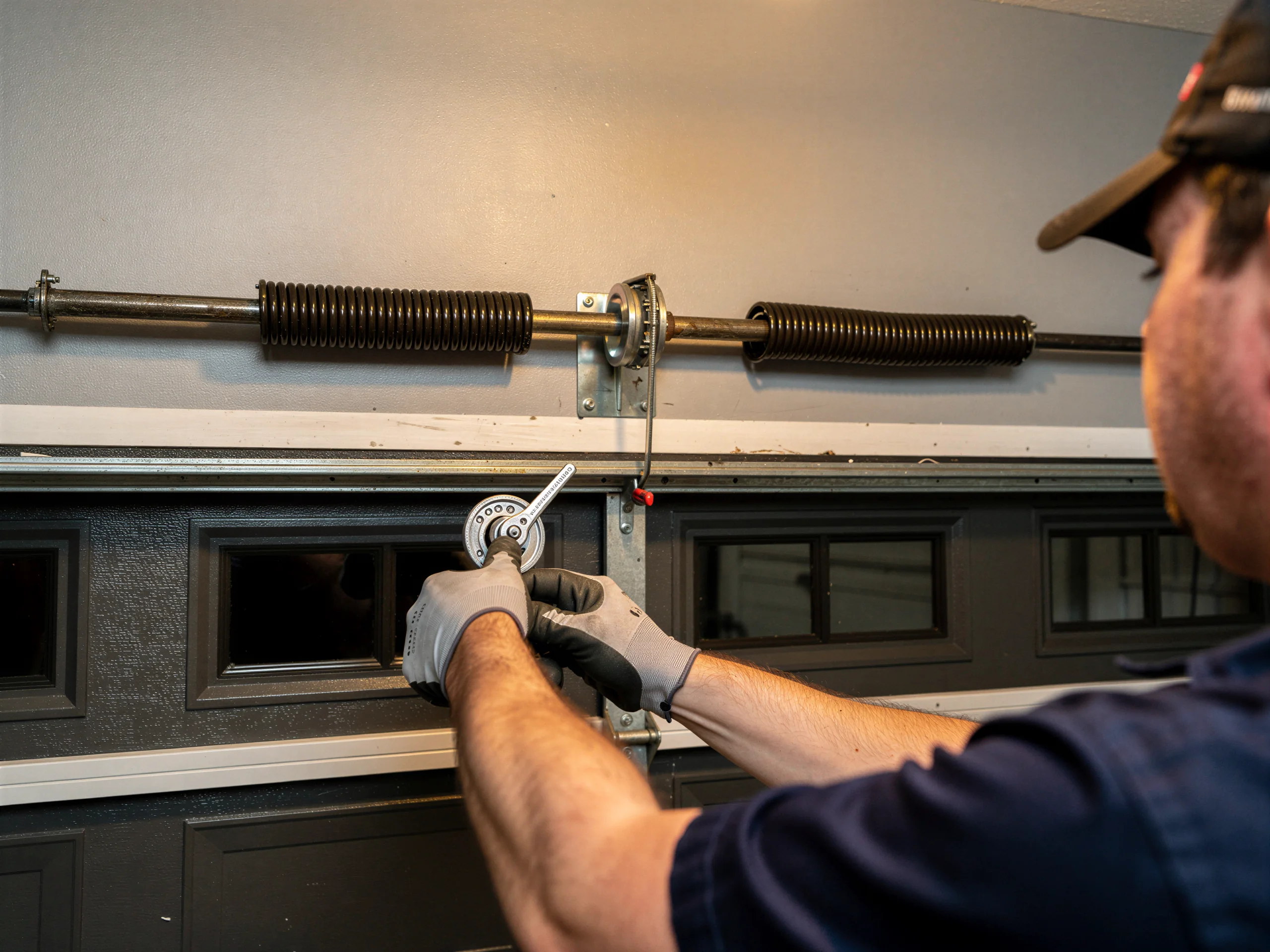
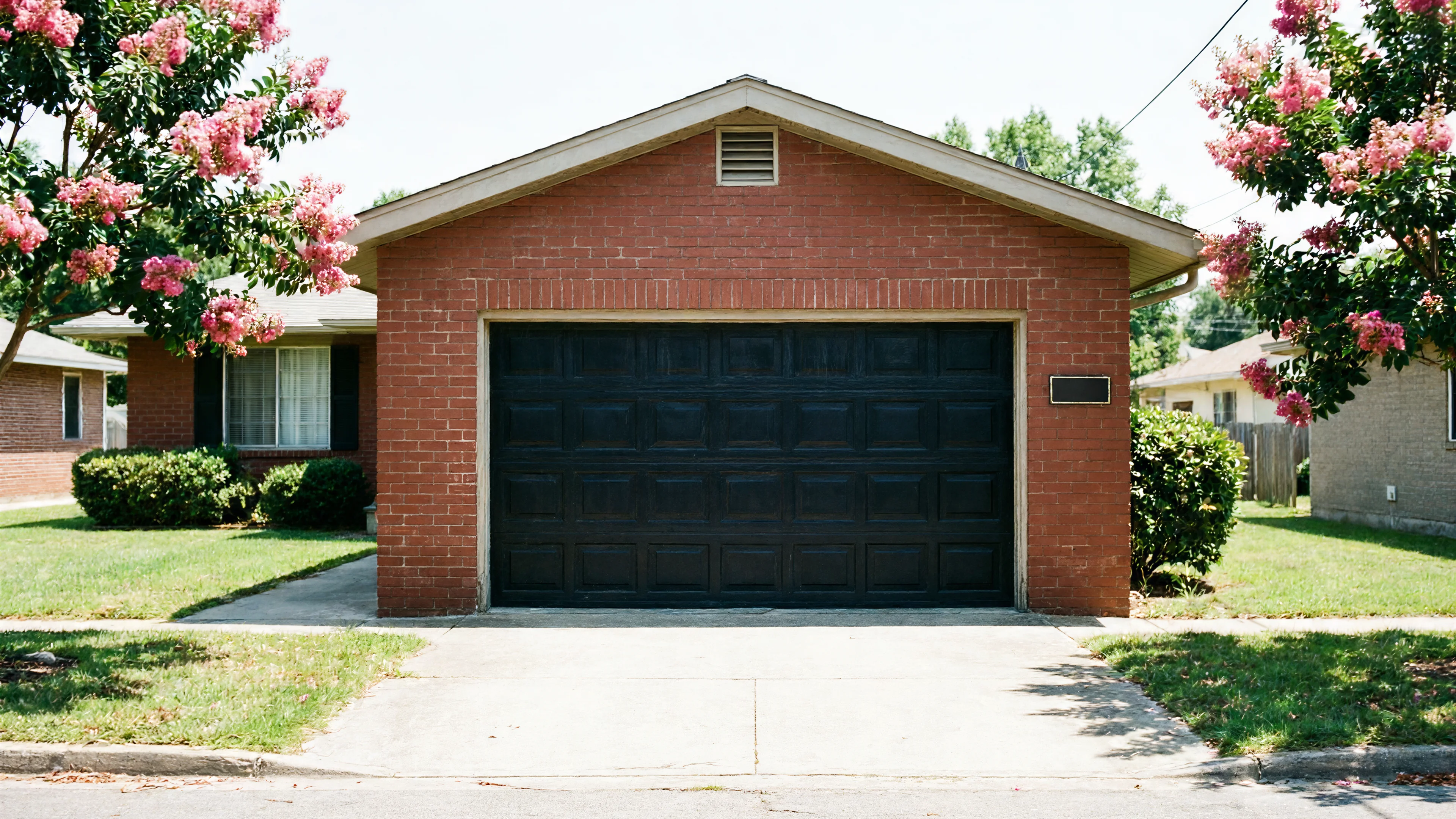
Most houses in the Richmond service area were built between 1972 and 2014, with the median landing around 1987. That means a large share of the torsion springs out on these doors right now are original 1980s-90s hardware, sized and wound to a cycle count that's long since run out even on a door that's never been touched. Across the thirteen communities we cover - from Cumings two miles out to Bunker Hill Village and Piney Point Village nineteen miles east - that older stock is the norm, not the exception.
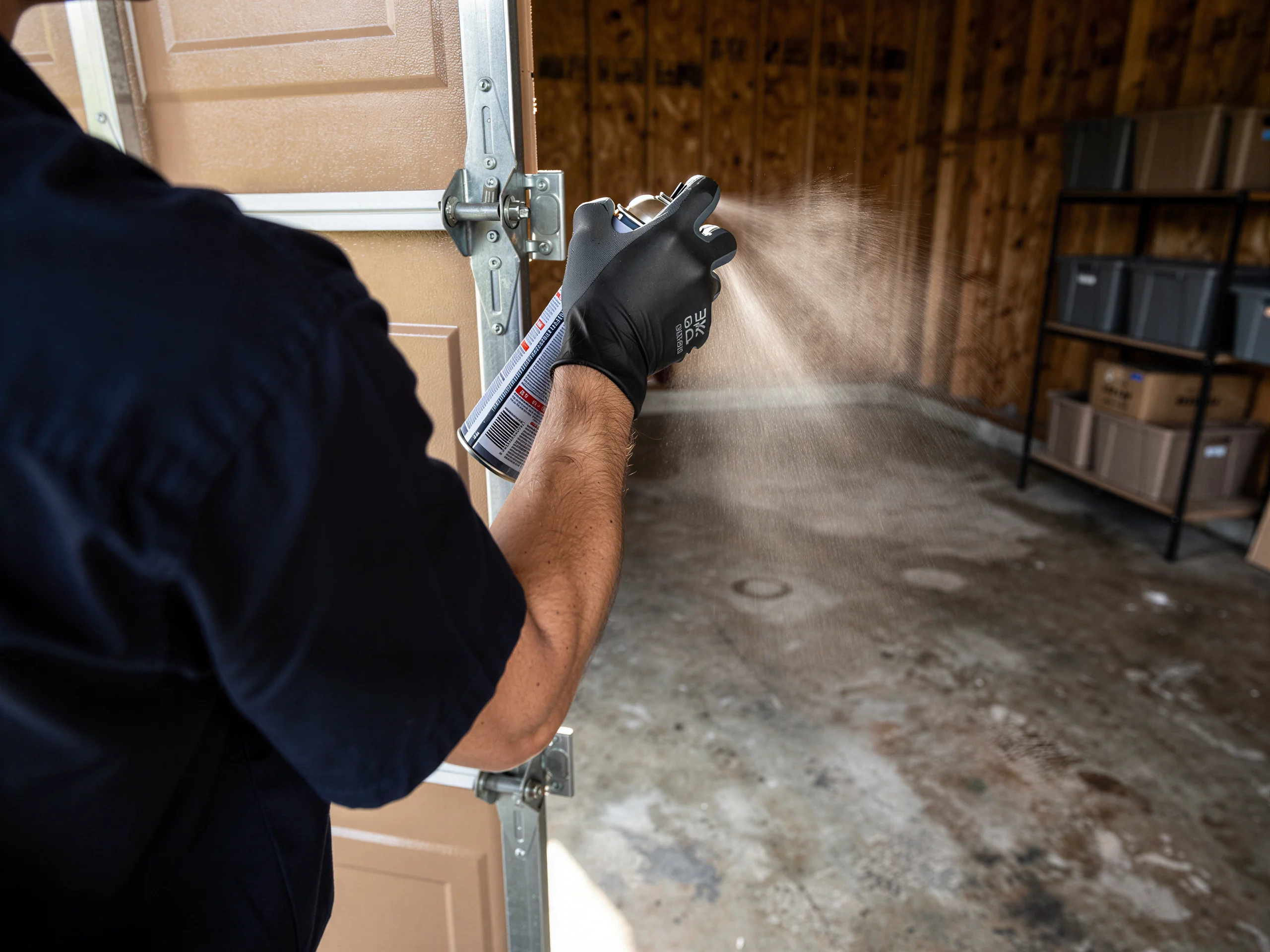
The climate here plays a role too, though differently than in colder regions. This is a moderate-heat band, not a freeze-thaw one, so springs here don't crack from cold the way they do up north. But summer heat still bakes the oil out of an unlubricated spring faster than owners expect, and a dry spring rubs and fatigues quicker under load. A garage that sits closed and un-air-conditioned through a Richmond summer puts real heat stress on the coil day after day.
With roughly 8,495 owner-occupied houses among the 12,455 households across this service area, that's a lot of double-car torsion setups built on the same age of hardware, carrying the same wear pattern, all heading toward the same kind of failure around the same age.