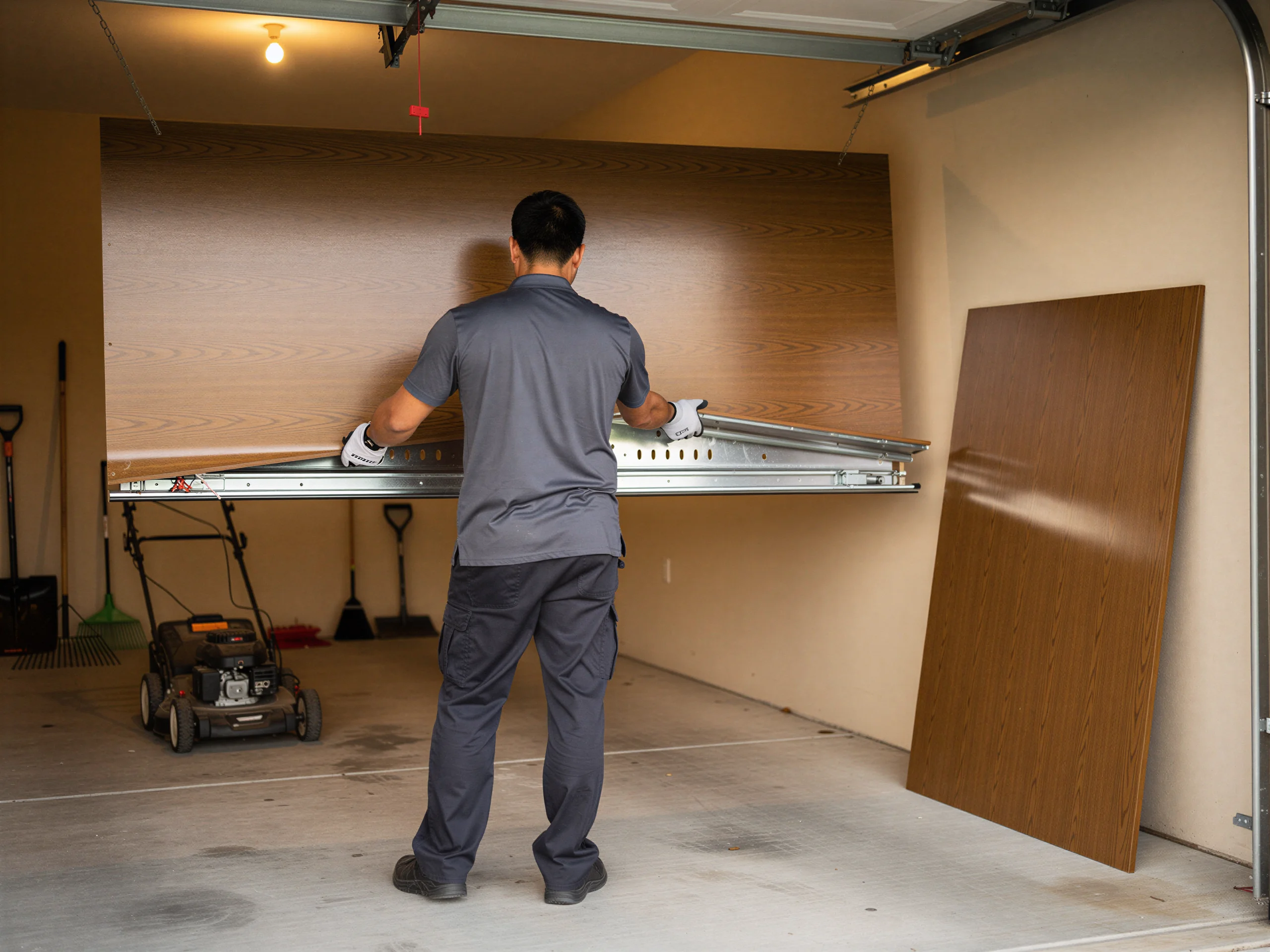
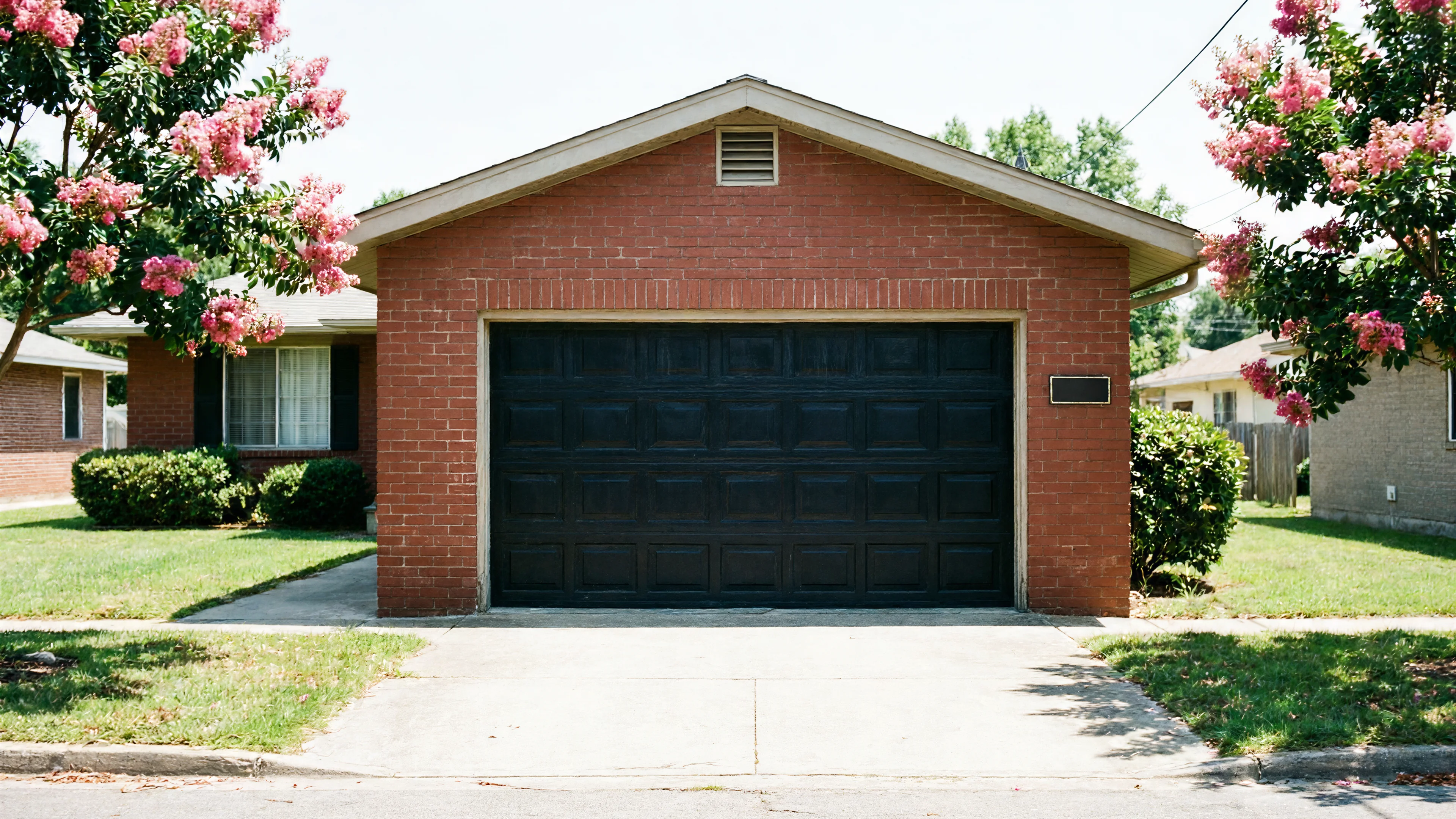
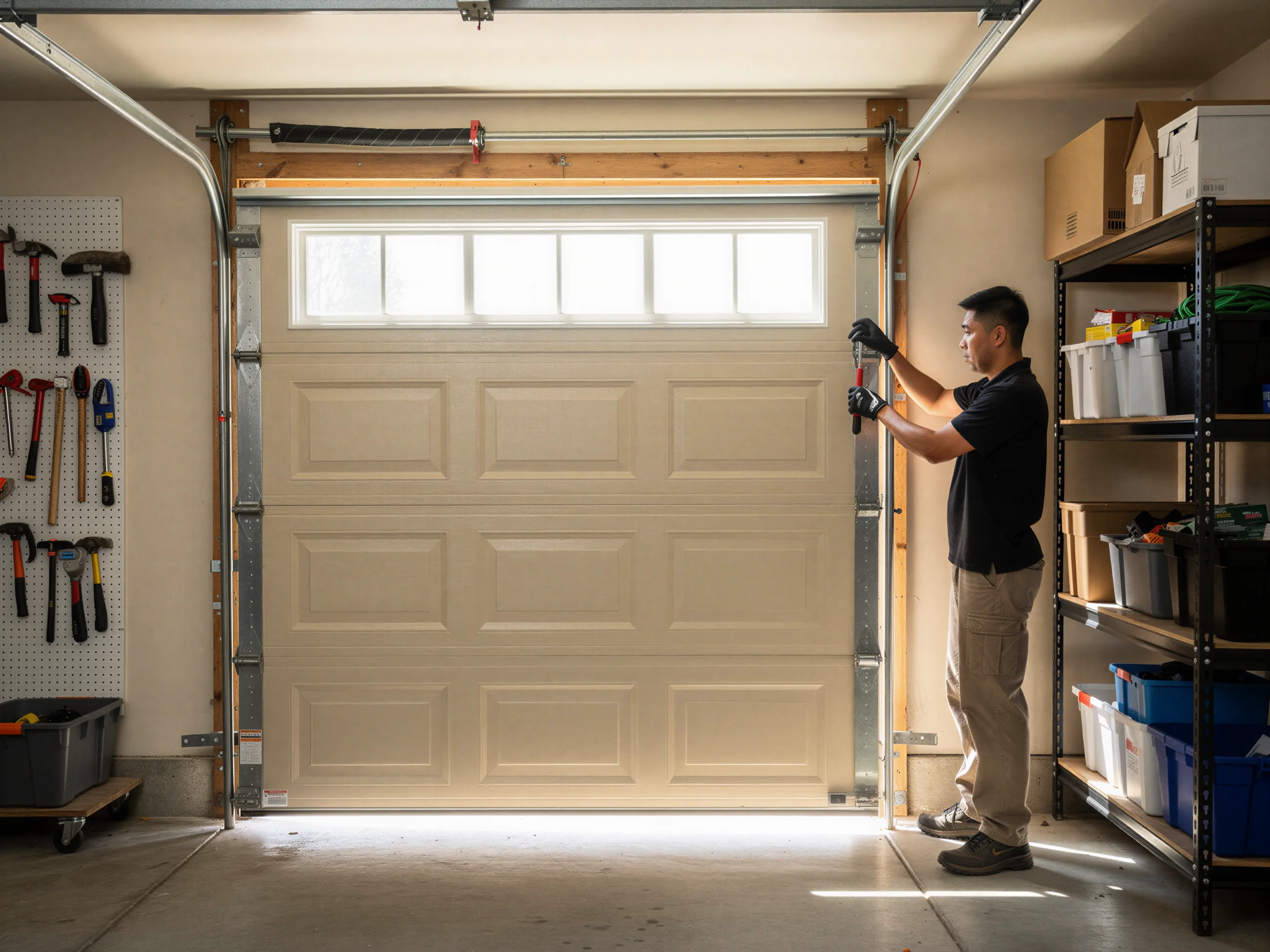
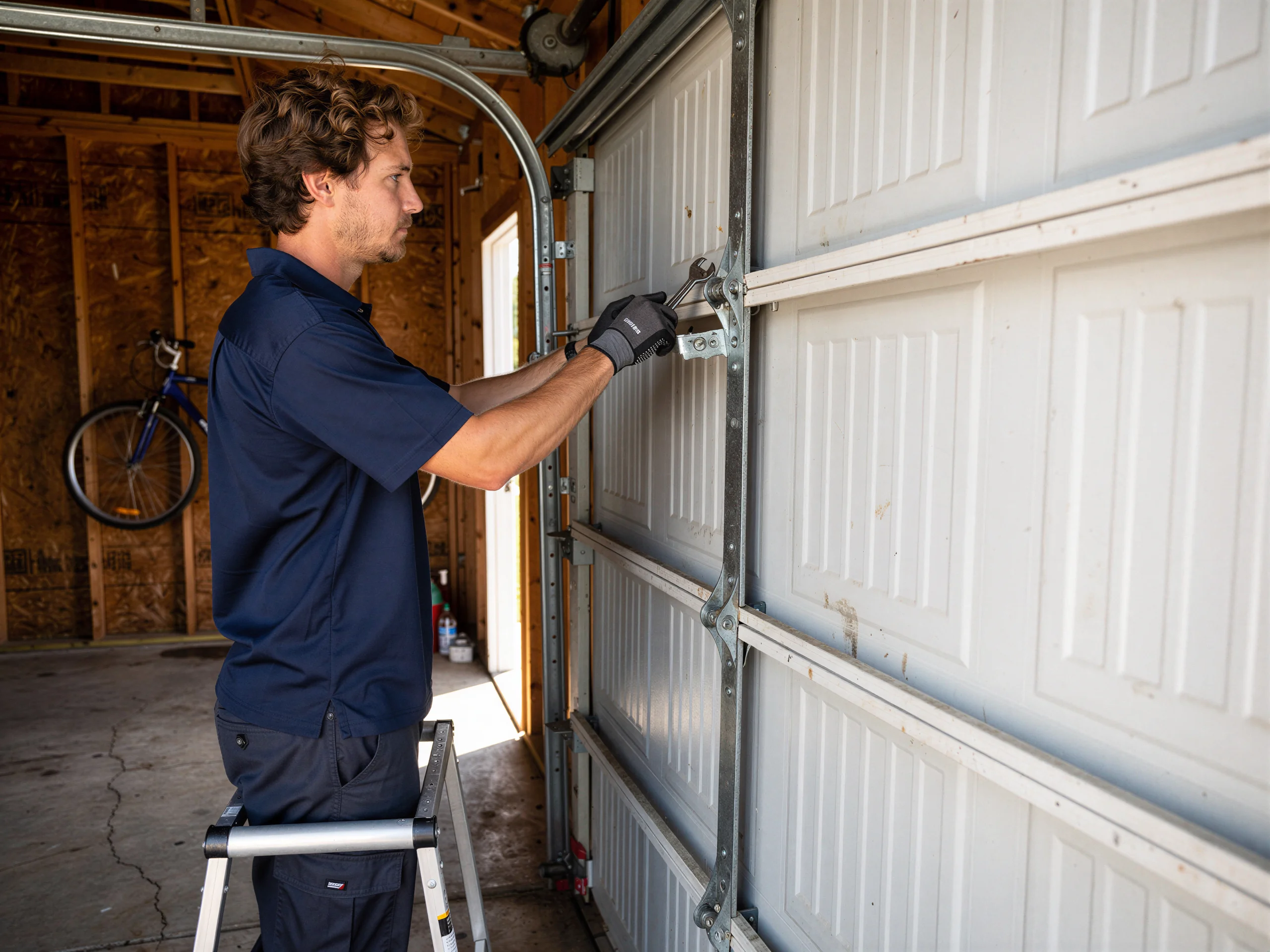
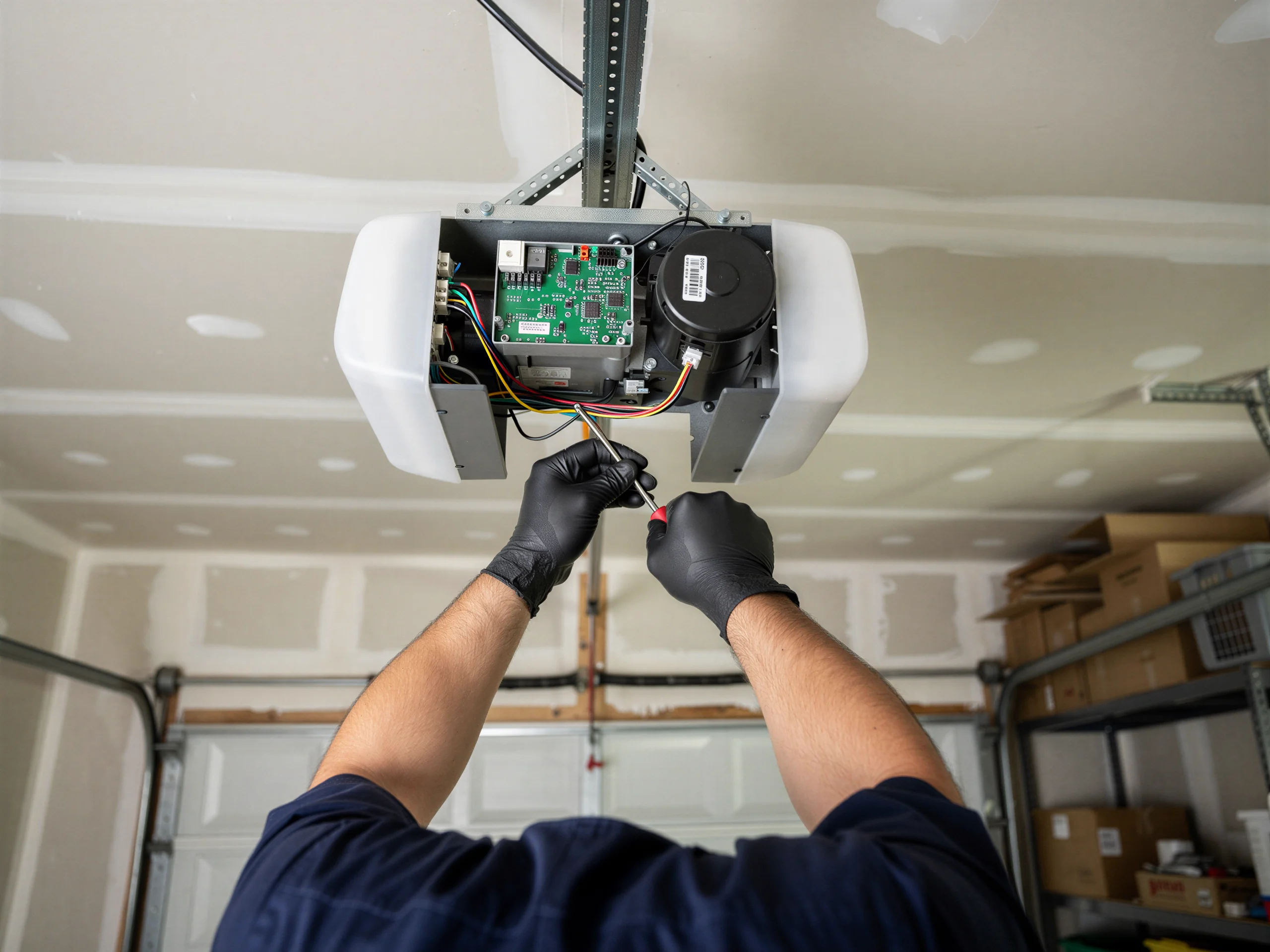
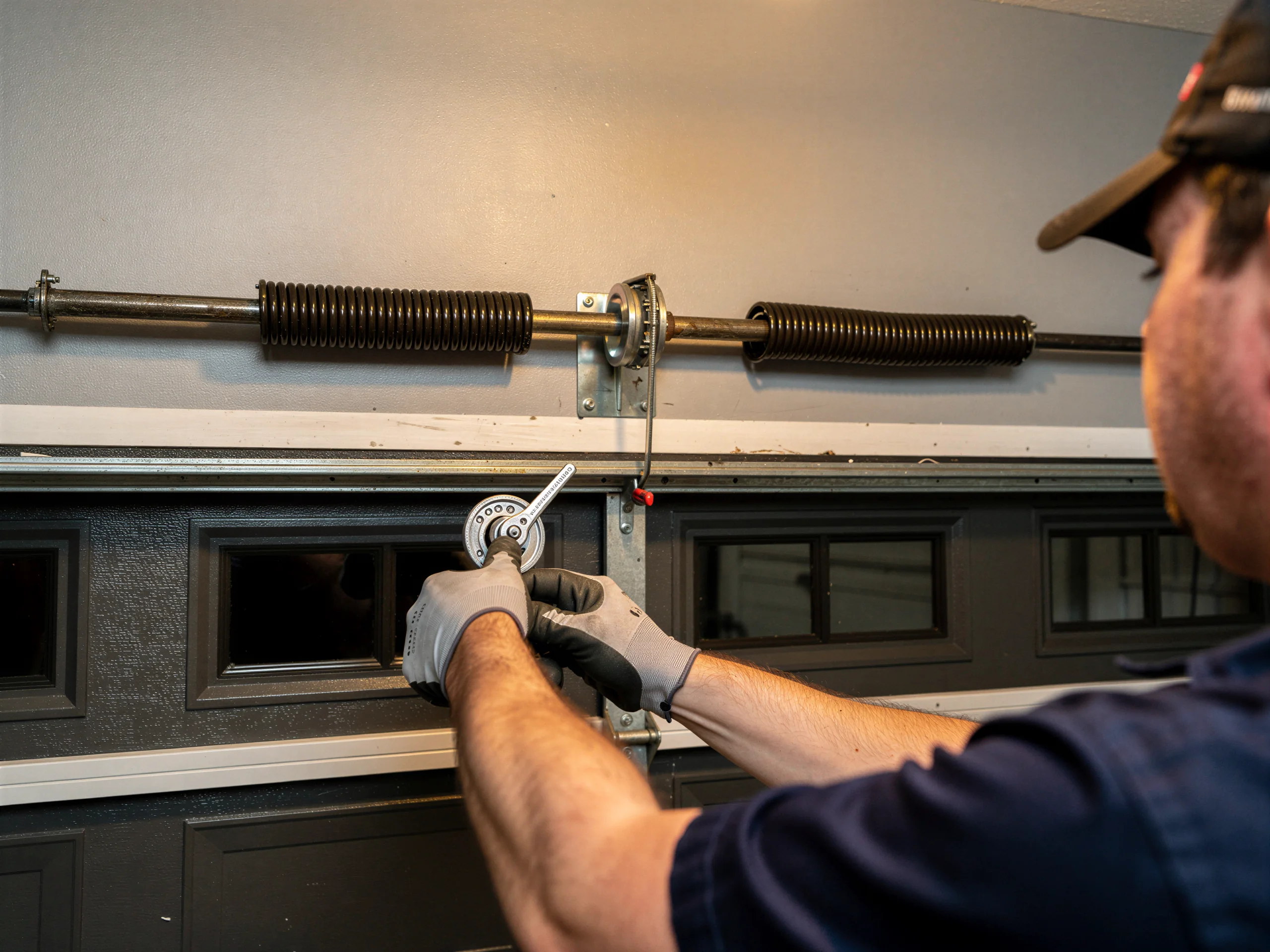
A lot of the housing stock we work on in the Richmond service area went up between 1972 and 2014, with the bulk of it dating to the 1980s and 90s across the thirteen named areas we cover. Doors from that era were sold with steel or aluminum panel sets that are a few decades old on most of these houses now - old enough that the factory coating has thinned and the steel takes a dent more easily than it did when the house was new.
The climate here sits in a moderate-heat band, which matters for panels more than people expect. Steel expands and contracts through the daily heat cycle, and a panel that's already dented or cracked flexes along that weak point every single day instead of holding its shape. That's why a dent that looked cosmetic in spring often has a visible crack running through it by late summer - the metal's been working that stress line every warm afternoon for months.
Because so much of the stock is from the same build decades, we see the same panel failure pattern house after house across the service area: original steel, original coating, a couple decades of heat cycling, and then one impact that finally finds the weak spot. It's less about any one storm or accident and more about panels that were due for this long before the dent happened.