
Hidden tension on panels
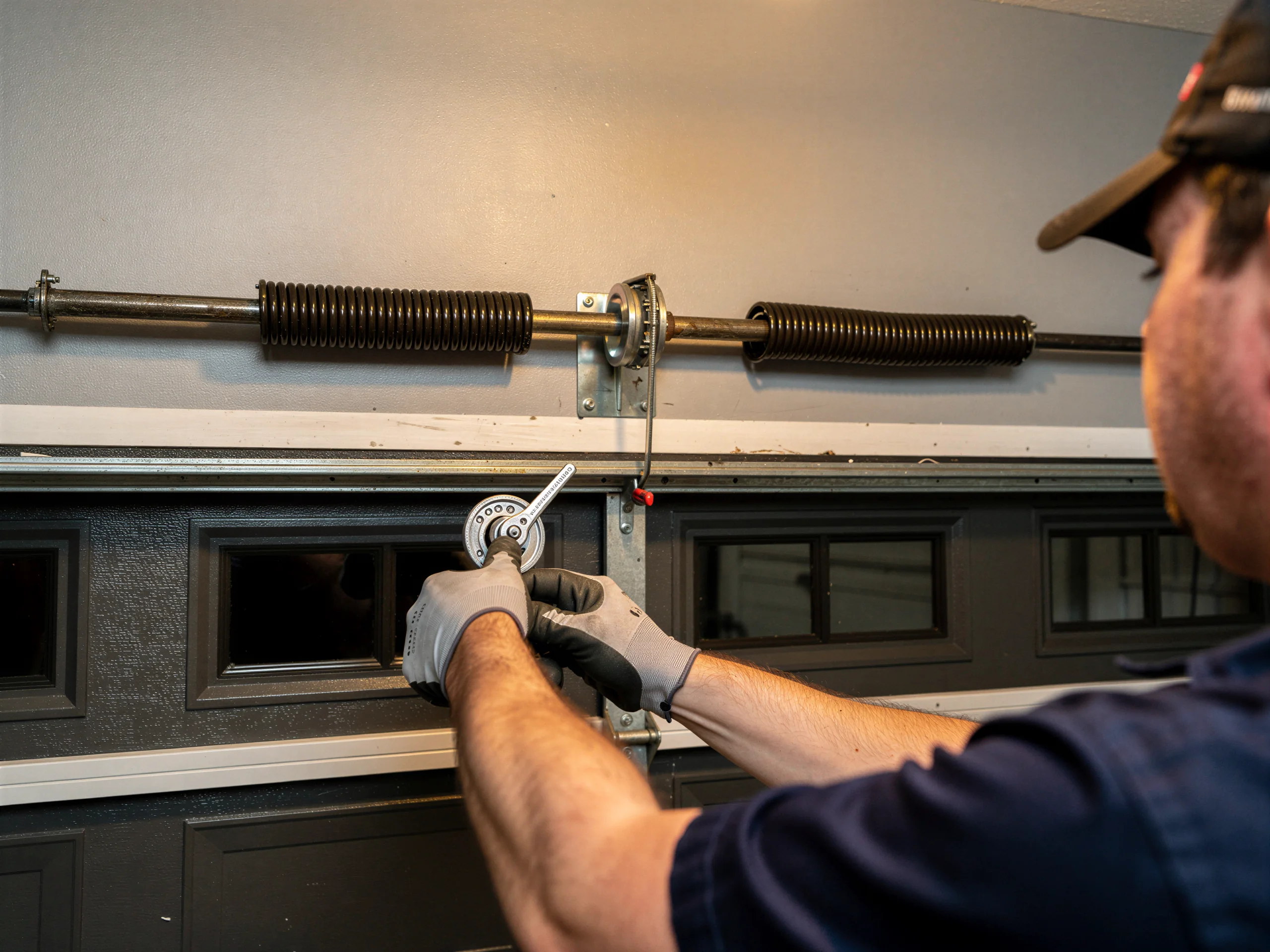
On a door like that, a bent track or a snapped cable can put the whole panel under spring tension in a way that isn't obvious from the garage floor.
East Bernard, Richmond
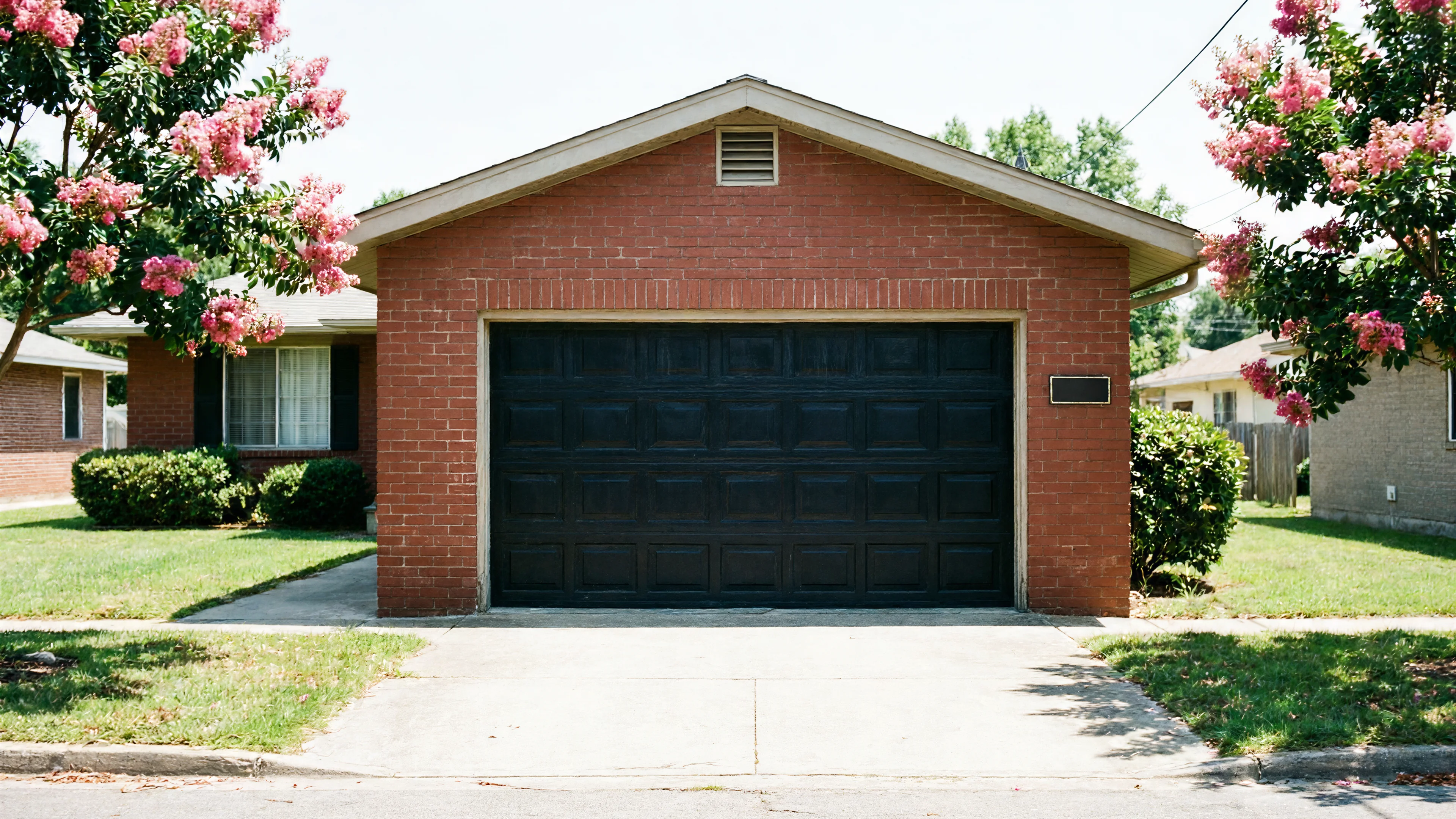
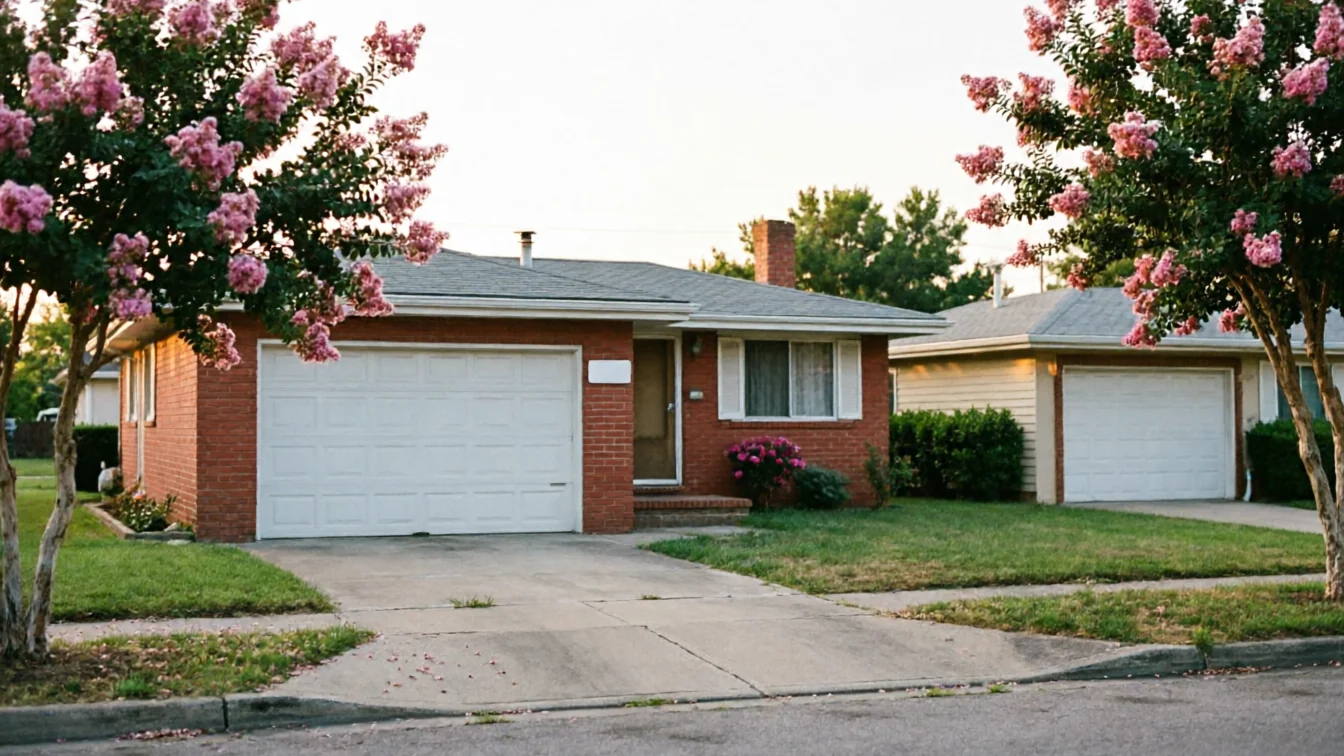
East Bernard's garage doors mostly date to 1980, older steel sectionals on rail-mounted hardware. We drive out from Richmond to fix doors that have jumped the track.
DIY or pro
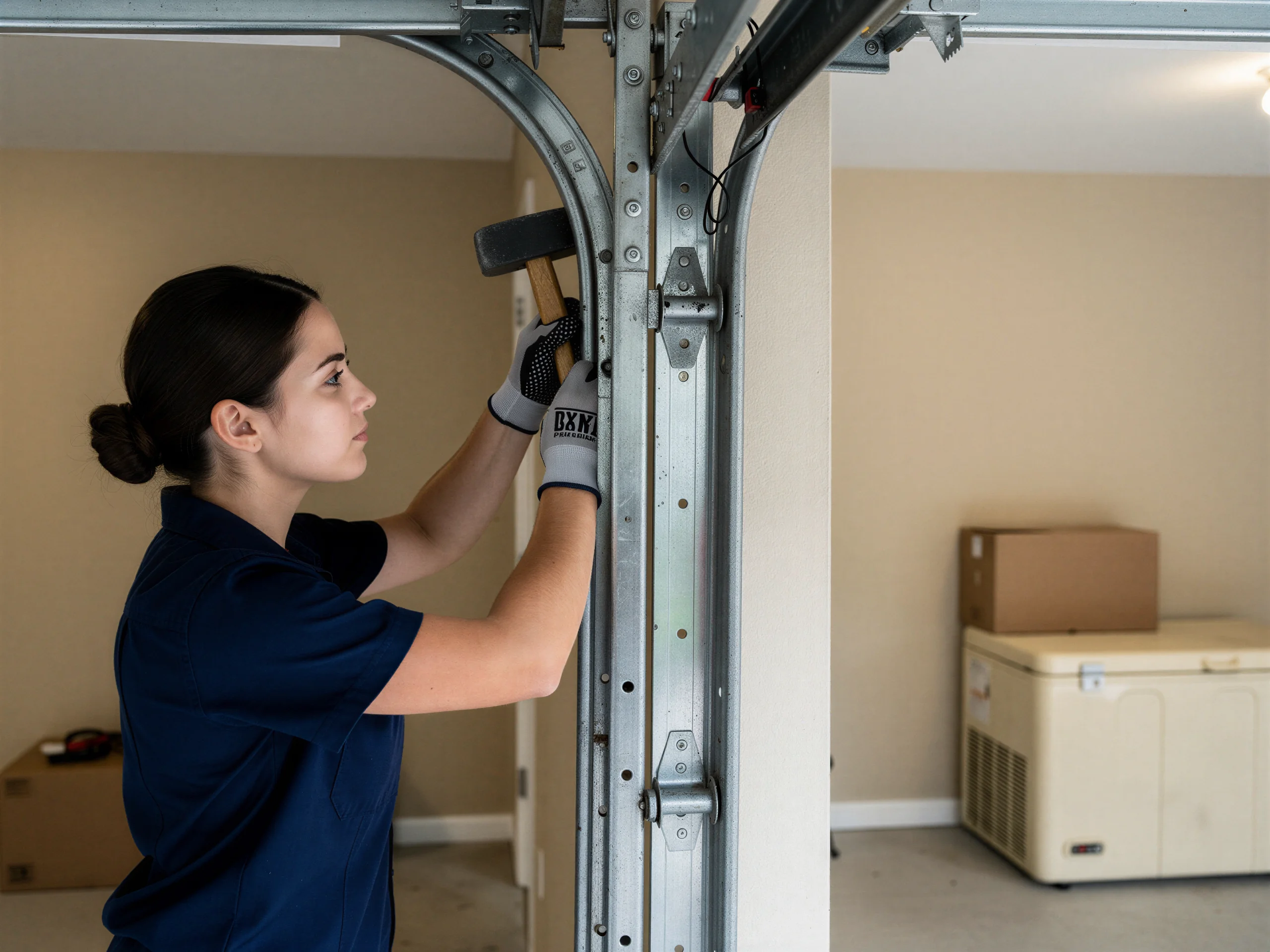
A door that's jumped the track looks like a two-minute fix. It isn't, especially on the doors common around East Bernard. Most of this town's houses went up around 1980, a few years ahead of the 1987 median for the wider Richmond service area, which means the garage doors on them are older steel sectionals, often still running original rail-mounted hardware instead of the torsion setups that came standard later.
On a door like that, a bent track or a snapped cable can put the whole panel under spring tension in a way that isn't obvious from the garage floor.
If the door is still partway up, or a cable has let go on one side, leave it. You can safely unplug the opener and leave the door where it sits.
What you shouldn't do is pull on the door, cut a cable, or try to force it back into the track yourself - on a 40-year-old door with original hardware, you often can't tell by looking whether a spring is still loaded or whether the track itself is cracked at a weld point.
Symptoms
Off-track almost never happens on its own. On the doors we see from this stretch of the service area, it usually starts with a roller that's worn through its nylon sleeve, or a track bracket that's worked loose from the jamb over three or four decades of thermal cycling.
The regional climate here runs moderate on the heat side, and that steady expansion and contraction of steel track sections, year after year, is enough to walk a bracket loose even when nothing else is wrong with the door.
You'll usually notice it as a grinding or popping sound before the door actually leaves the track, or a visible gap between the roller and the rail on one side.
Once a panel is off-track, running the opener again is how a $150 roller problem turns into a bent track and a cracked panel. Houses here tend to run plain steel sectional doors rather than anything custom, which is one reason the symptom looks the same on most calls we take out this way.
On the truck
For a door built the way most of East Bernard's were - steel panels, galvanized track, nylon or steel rollers - we carry the parts that fail most on that generation of hardware: roller assemblies, flag brackets, track sections, end bearing plates, and the steel hinges that connect panels at the roller. What we don't always have on the truck is a replacement panel to match an original door from 1980; some of these colors and panel profiles aren't made anymore, and matching one exactly can mean a special order with a real wait. If a single panel is bent badly enough that it needs replacing rather than straightening, we'll tell you that up front rather than promise a same-day match we can't deliver.
Pricing
We don't post a flat number for this because off-track jobs vary with what caused it - a bent track section costs more to fix than a loose bracket, and a cracked panel changes the job again. What we can tell you is that East Bernard sits about 18 miles out from our Richmond base, farther than most of the towns we cover, so a wrong diagnosis over the phone costs more here in wasted driving than it would on a closer call. With median household income in this area around $73,775, most of the jobs we do here are straight repairs - bracket, roller, track realignment - rather than full door replacement, and we'll always say so if the door's hardware is solid enough that replacement isn't the better call.
The repair
First we check whether the springs are still under tension before anyone touches the track - on an original 1980s door, that's not always obvious from the outside.
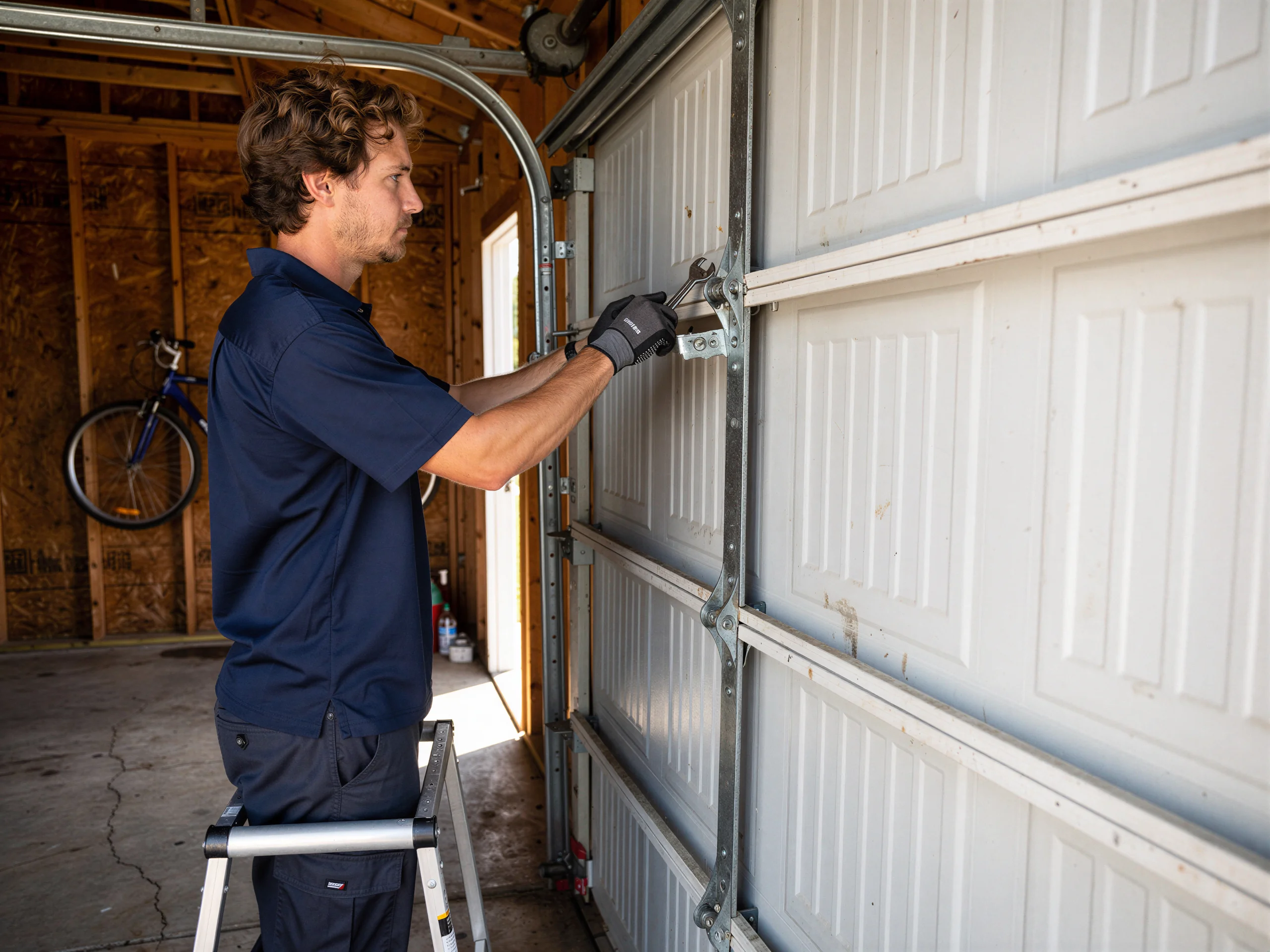
Once the door is secured, we pull the bent or detached track section, check the brackets for cracked welds or stripped lag screws into the jamb, and reset the rollers into a straight run.
If the track itself is salvageable, we realign it and replace the worn rollers and brackets rather than the whole rail. If a section is bent past straightening, we replace that run of track to match the existing gauge.
With roughly 981 households in East Bernard on this general vintage of door, the fix is usually one of a handful of repeat jobs, not a custom one - which keeps the part costs down even with the drive.
Questions
No. A door that's off-track on even one side is often still under spring tension, and running the opener again can bend the track further or pull a panel loose entirely. Unplug the opener, leave the door where it is, and call. It's a cheaper fix sitting still than it is after another cycle.
For the hardware - rollers, brackets, track sections, hinges - yes, that's standard stuff that fits most steel sectional doors from the 1980s. Matching an exact panel color or profile from a door that old is less certain; some of those runs aren't made anymore.
We're based in Richmond, and East Bernard is about 18 miles out, one of the farther stops on our route. That doesn't change the repair cost, but it's worth getting the problem described accurately on the phone so we bring the right parts the first trip.
Usually not, if the track is the only thing damaged. Most of the off-track calls we take on doors from this era are a bent section, a loose bracket, or worn rollers - all repairable. Replacement makes sense when a panel is badly bent or the door is rusted through, not for a track problem alone.
Explore more
Ready when you are
Richmond Garage Door Pros repairs and installs garage doors, springs and openers in Richmond, TX and the surrounding area.