
Late-70s heavy setups
A lot of these are original torsion setups from the late 70s and early 80s, built with heavier steel sections and single-torsion springs sized for doors that weigh more than what gets installed today.
East Bernard, Richmond
East Bernard homes mostly date to 1980, a different era of hardware than the rest of the service area. We drive the 18 miles from Richmond to fix springs, openers, and tracks here.
DIY or pro
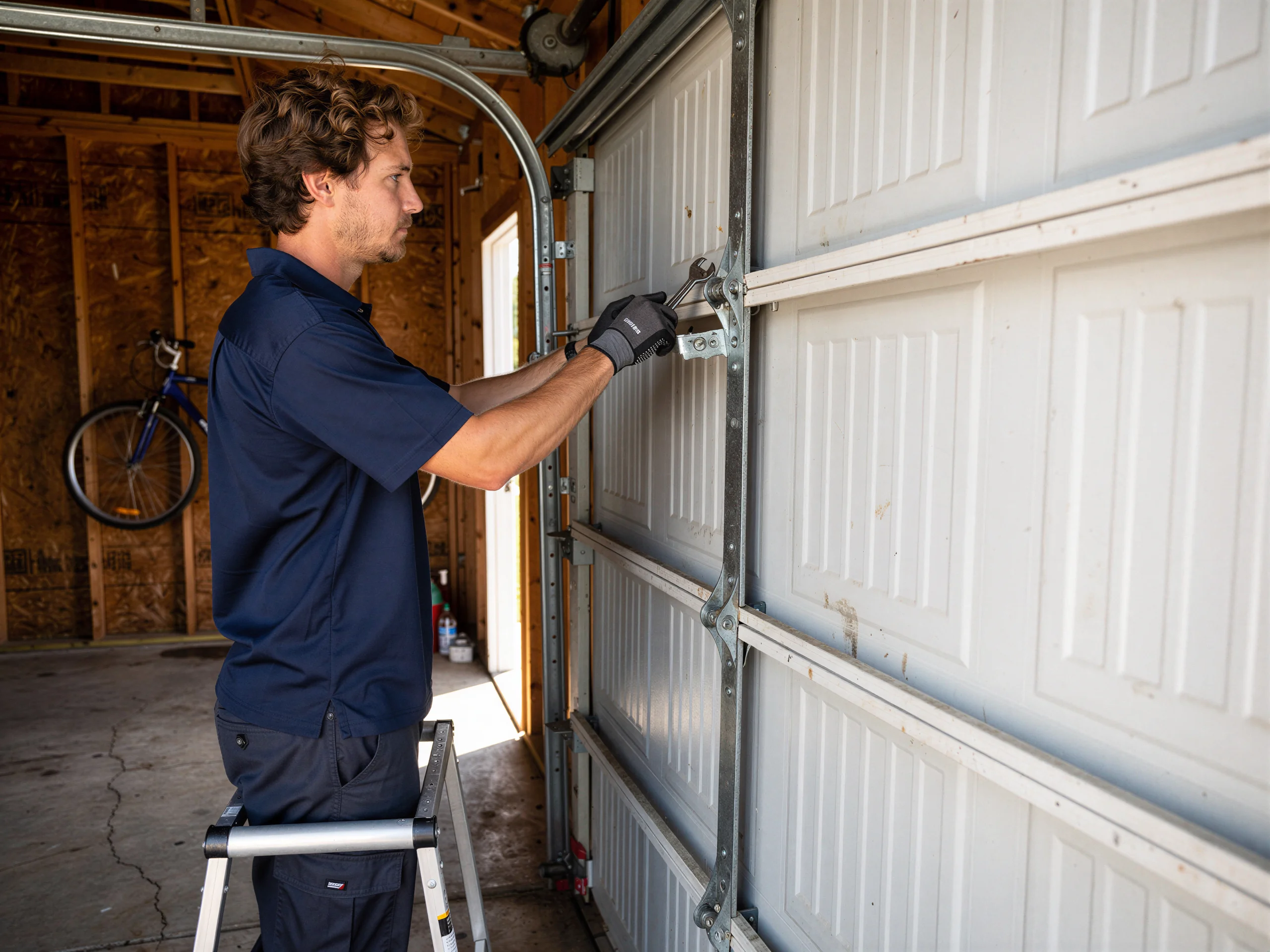
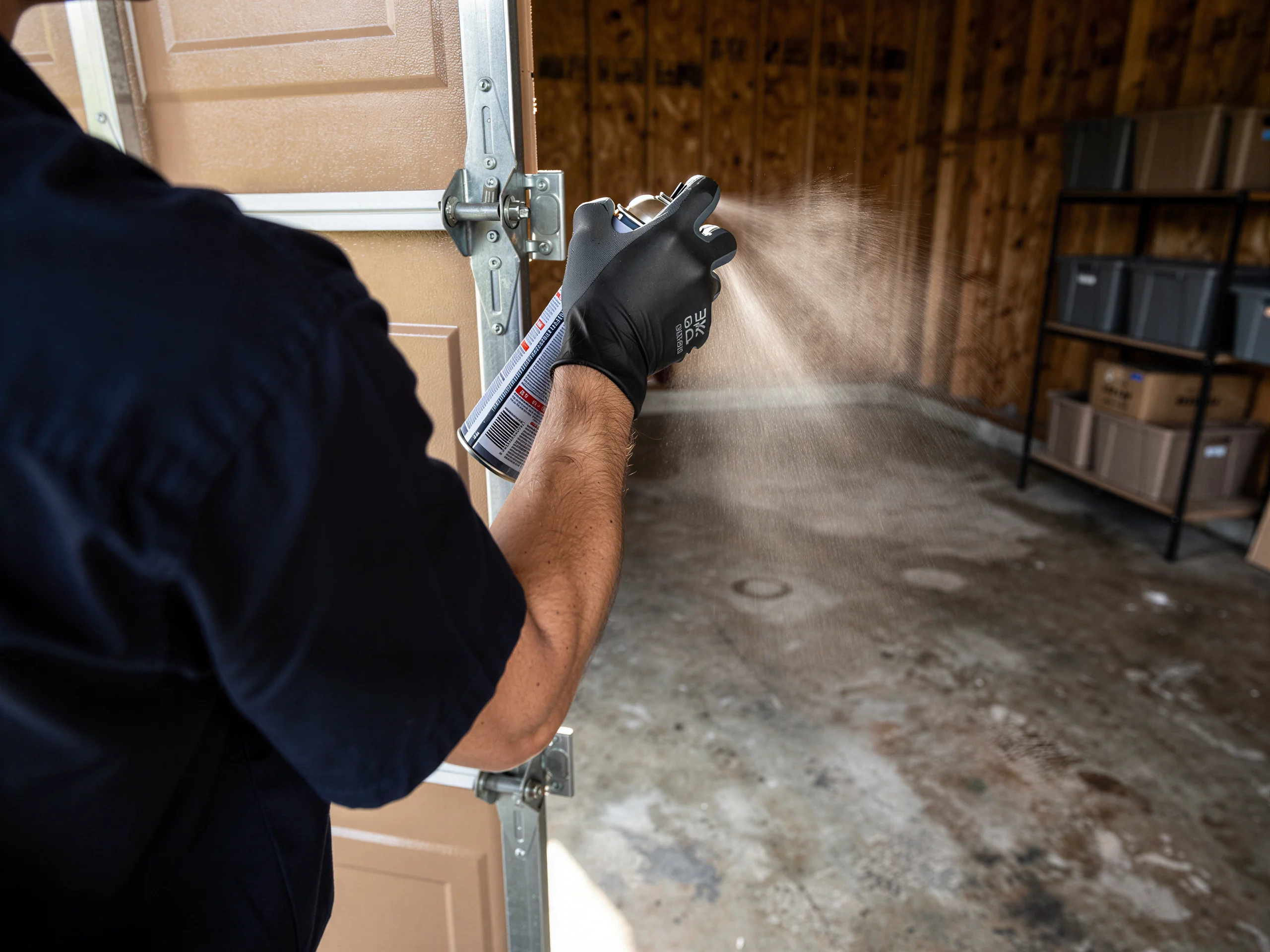
East Bernard runs a median household income of $73,775, close to the $72,853 average across the whole area we cover, which puts most homes here in the range where a torsion spring job makes sense to pay for rather than attempt. That's the honest line: springs are under enough tension to put someone in the hospital, and a cable off its drum is not a YouTube afternoon. What you can do yourself is simpler stuff - tightening loose hinge bolts, cleaning track debris, lubricating rollers, replacing weatherstripping. If the door is off-balance, binding on one side, or the opener is grinding and reversing, that's a call, not a project. We won't talk you into a service call for a squeak that WD-40 fixes, but we also won't pretend a snapped spring is a weekend fix. Know which one you're looking at before you decide to open the garage and start.
Symptoms
The median year built here is 1980, a few years ahead of the 1987 median for the broader service area, which means East Bernard's doors skew slightly older than what we see on an average call.
A lot of these are original torsion setups from the late 70s and early 80s, built with heavier steel sections and single-torsion springs sized for doors that weigh more than what gets installed today.
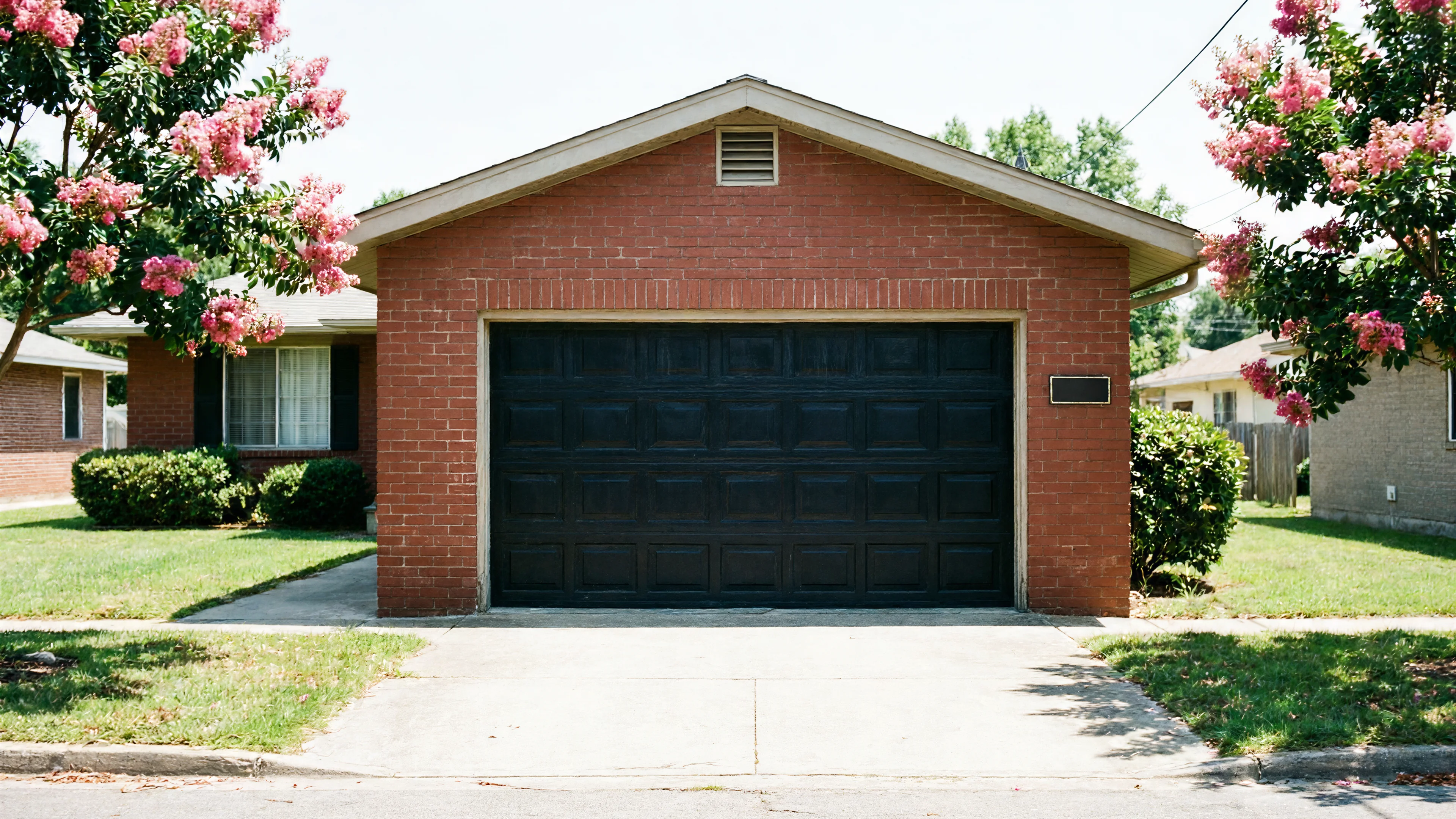
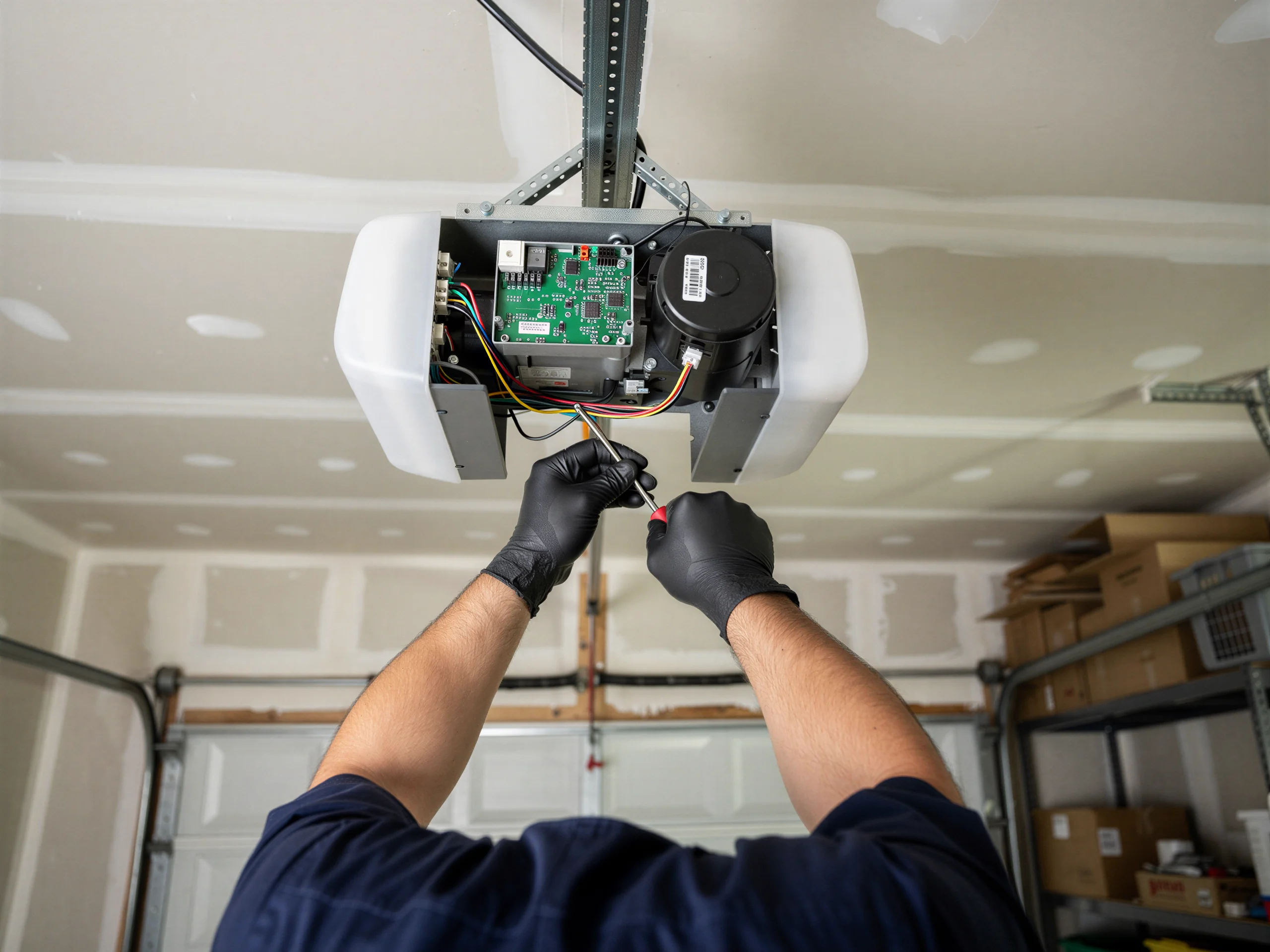
The usual symptom on a house this age is a door that's gotten noticeably heavier to lift by hand, or an opener straining and reversing partway up - both point to a spring that's lost tension gradually rather than snapped outright.
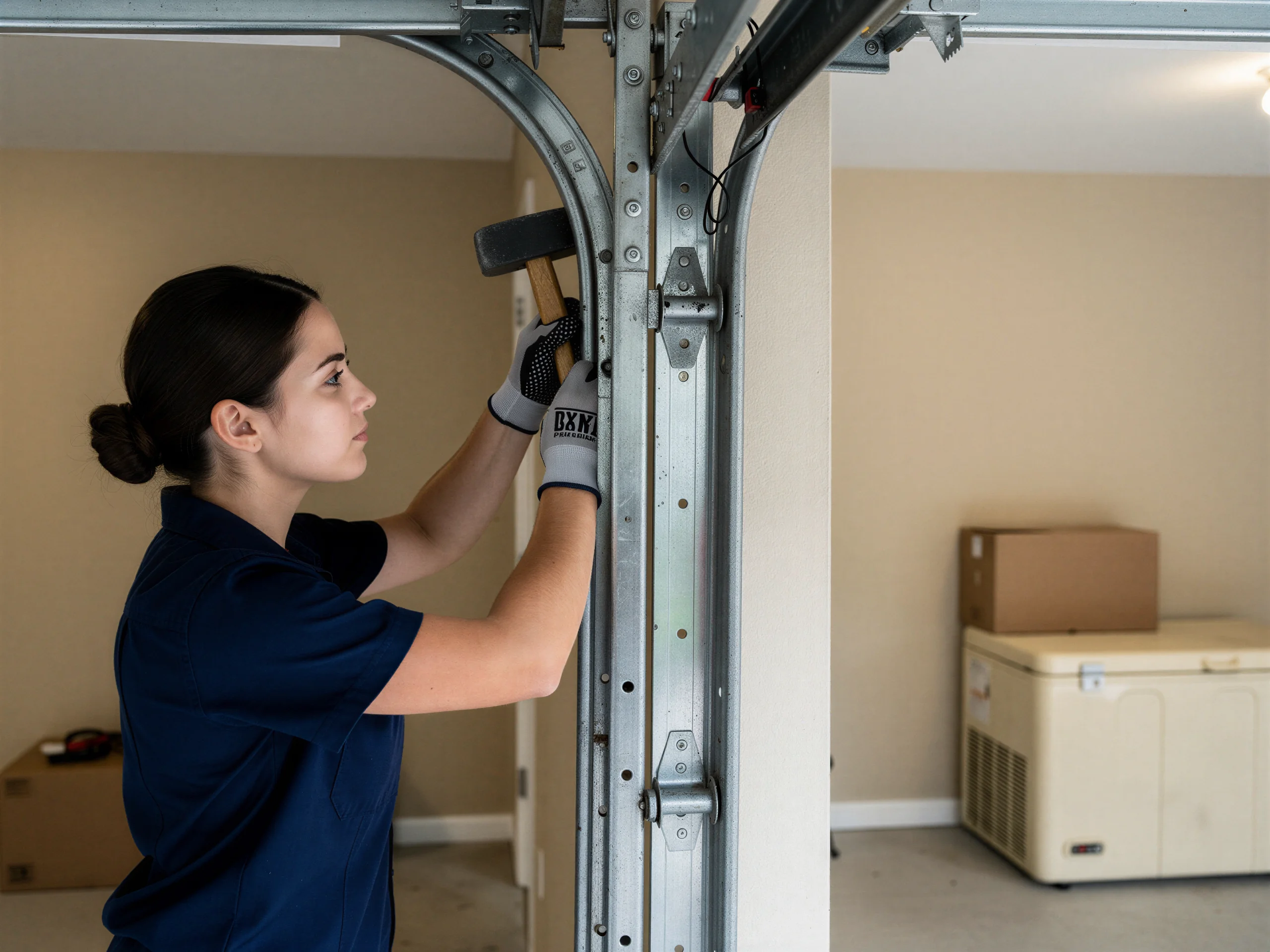
On these older units the drum and shaft hardware is also a common wear point, since it's had four decades to loosen or rust at the set screws. If your door has started sagging unevenly on one side when it's down, that's usually a cable or a spring on that side giving out, not the opener.
On the truck
For a town with mostly 1980s stock, we carry torsion springs in the weight ranges those original doors actually need, not just what fits a modern lightweight panel.
Galvanized springs and nylon rollers hold up fine under this area's moderate heat band, so that's what goes on the truck rather than anything built for harsher climates.
We stock standard-lift cable, drum sets, and the steel hinges that match older heavy-panel doors, plus the sensor and belt-drive parts for the newer openers that have replaced original chain units over the years.
What we don't carry on the truck is obsolete wood-panel sections or custom-width track for doors built outside standard sizing - if a house here has a non-standard opening, that part gets ordered and the job gets scheduled around lead time. We'd rather tell you that up front than show up and discover it on site.
Pricing
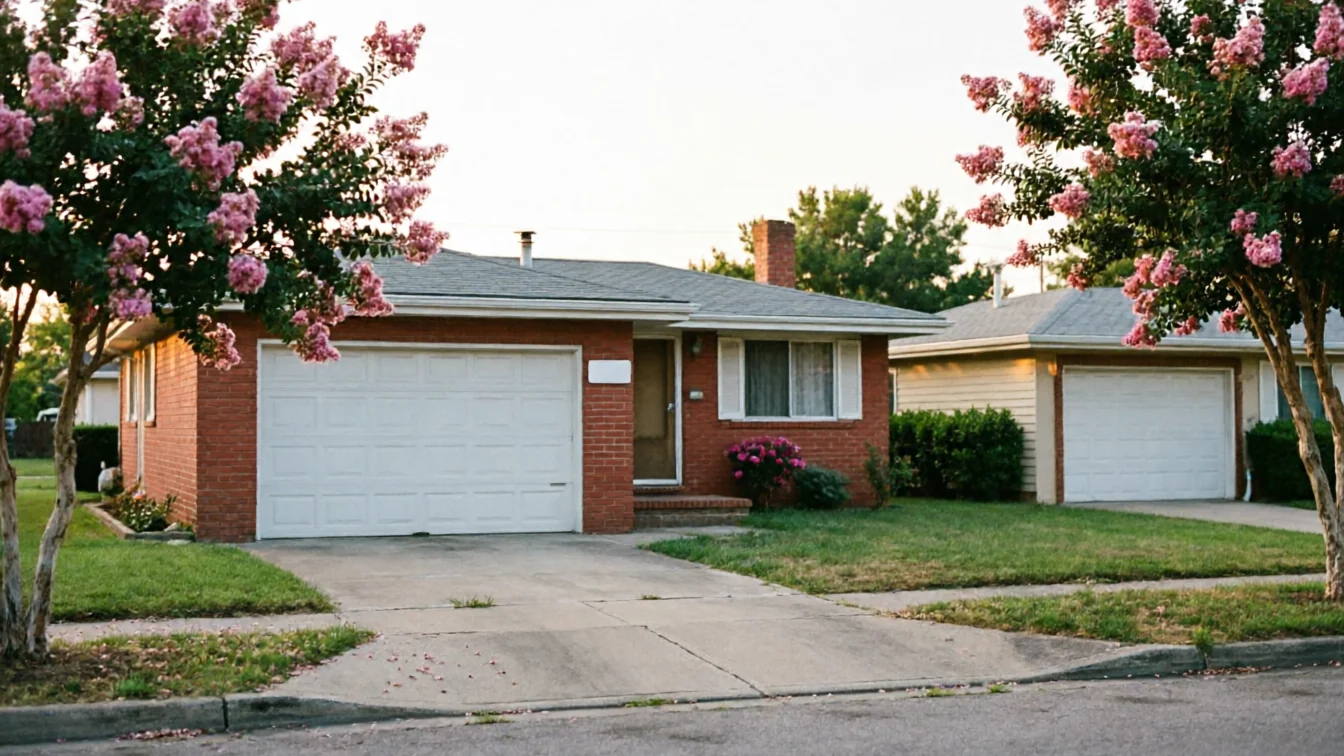
At a median household income of $73,775, East Bernard sits in the range where most spring and cable repairs are worth doing rather than replacing the whole door, especially on the heavier 1980s-era doors that would cost more to match in a new install. Where the math shifts is on doors with steel that's rusted through at the bottom panel or track that's bent beyond straightening - on those, a repair becomes a patch that fails again within a year or two, and replacement ends up cheaper over time. We don't quote a number without seeing the door, since spring size, opener age, and whether the track needs full replacement all move the price. What we will say is that a two-spring torsion job on an older heavy door costs more in parts than the lighter single-spring setups common on newer builds, simply because the springs themselves are bigger and rated heavier.
The repair
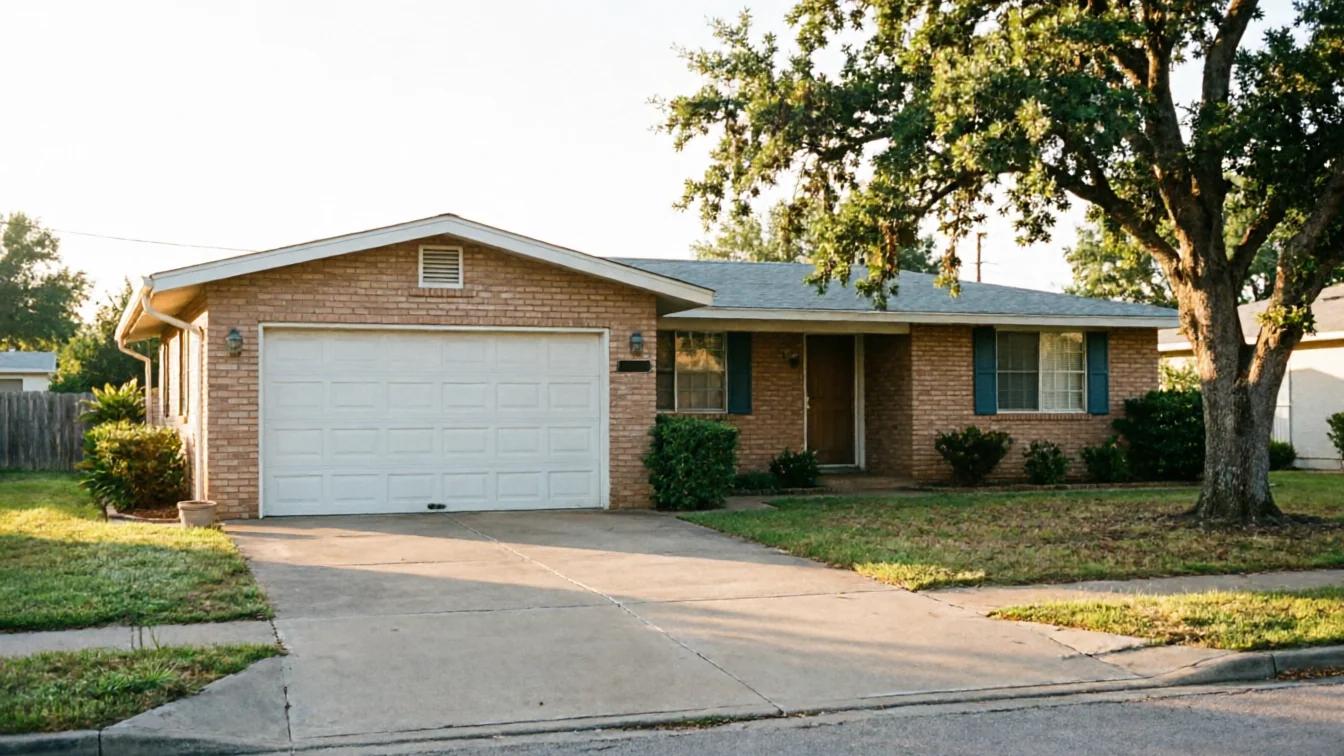
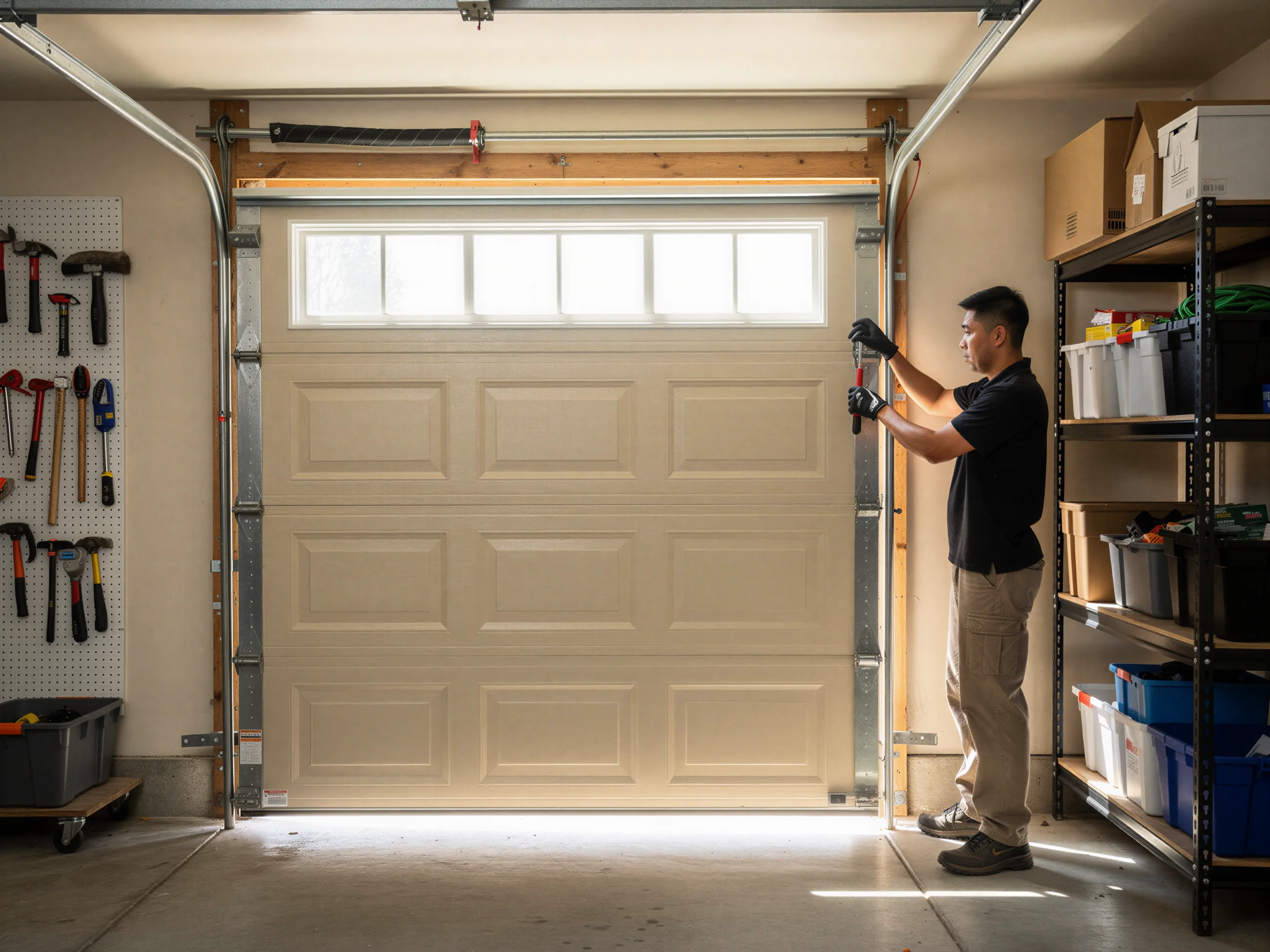
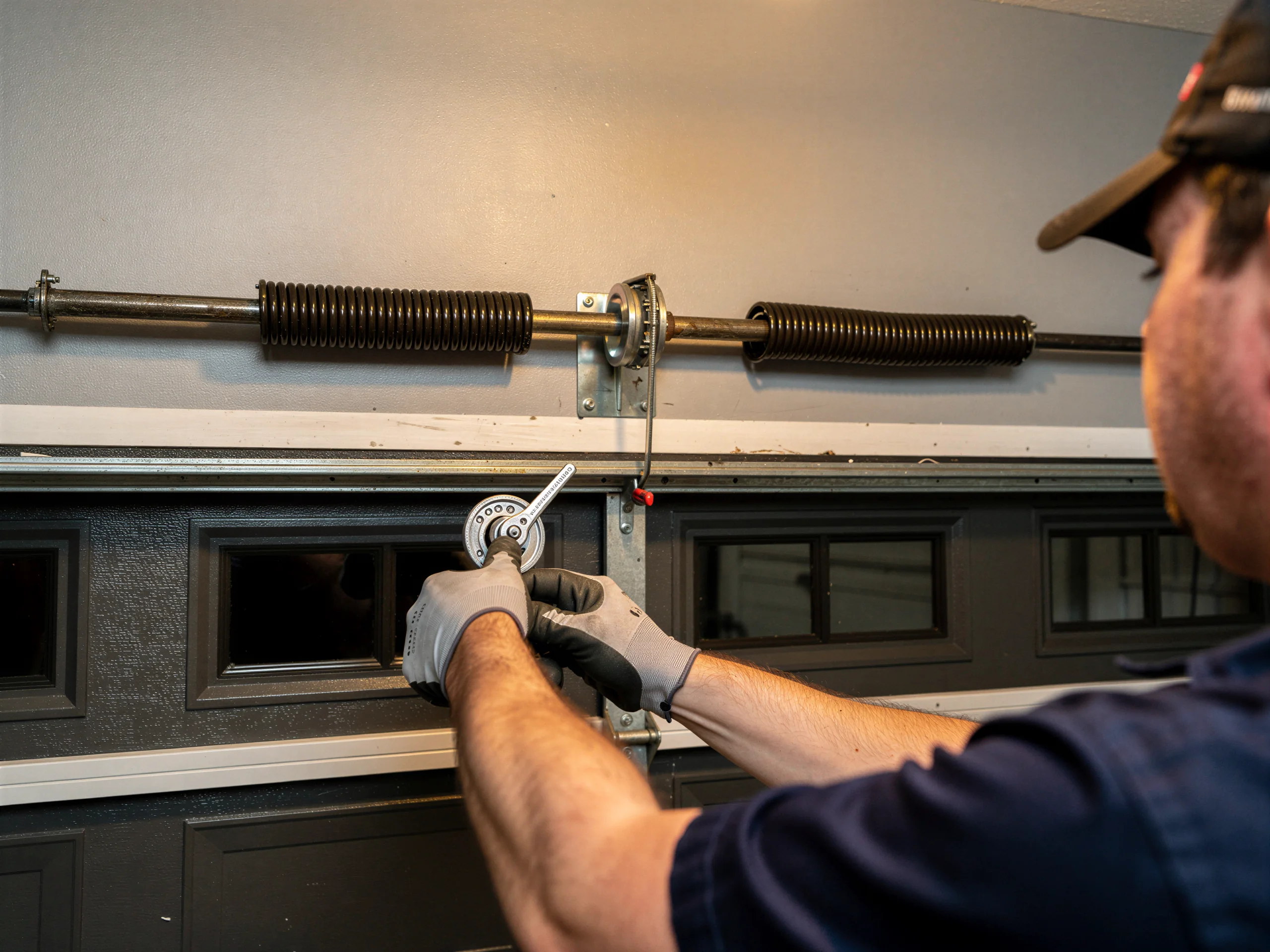
We come from Richmond, 18 miles out, so the truck is stocked before it leaves - for East Bernard that means springs sized for the heavier 1980s doors, standard cable and drum sets, and the hinge hardware that matches original installs from that era. On arrival the first step is checking balance and spring tension, since that tells us whether we're dealing with one tired spring or a matched pair that both need replacing together, which is standard practice on a torsion setup even if only one has failed. From there it's disconnecting the opener, releasing tension safely, swapping the spring or cable, and rebalancing the door by hand before testing it on the opener again. A full torsion replacement on a two-car door usually runs under two hours once we're on site; track or panel work on a damaged door takes longer and sometimes means a second trip if a part has to be ordered in.
Questions
On a house from around 1980, a door that's gotten heavy to lift usually means the torsion spring has lost tension gradually rather than snapped outright. It's common on original hardware that's had four decades of cycles. Left alone, it puts more strain on the opener motor, which is often the next thing to fail.
Yes. Since most East Bernard homes date to around 1980, we stock torsion springs, drums, and hinges sized for those heavier original panels, not just lightweight modern parts. Non-standard sizing or obsolete wood sections sometimes need to be ordered, and we'll tell you that before starting the job.
Usually not, at the income and housing levels typical here - most spring and cable repairs are worth doing on these heavier older doors. Replacement starts to make sense when the panel steel has rusted through or the track is bent beyond straightening, since a patch on either of those tends to fail again.
We work out of Richmond, about 18 miles away, so the truck is loaded with the parts an East Bernard job typically needs before it leaves. That distance is why we stock ahead rather than figure it out on site.
Explore more
Ready when you are
Richmond Garage Door Pros repairs and installs garage doors, springs and openers in Richmond, TX and the surrounding area.