
Never force while running
That's the limit of what's safe without a bar and clamps. What you shouldn't do is force a door back onto the track while the opener is still trying to run it.
Four Corners, Richmond
Four Corners homes mostly date to the early 2000s building boom, not Richmond's older stock. Here's what that means when a door jumps its track.
Booking
Four Corners sits about nine miles from our shop in Richmond, so when you call about a door that's jumped its track, you're booking a truck that drives out, not a crew that's already around the corner.
That's worth knowing up front because it shapes the timing of the call, not just the price. Most of the doors we see out here went up around 2004, during the subdivision push that filled this part of the county with two-car garages.
That's newer stock than you'll find on the Richmond side, where the service area's median build year runs closer to 1987. Newer doesn't mean the tracks can't bend or the rollers can't jump the rail - it just means the hardware is usually still the original builder-grade steel track and nylon rollers, not something replaced twice over.
If you're closer to Bridlewood Estates, about five miles southeast of here, the same truck covers you on the same run - it just adds a few minutes either way. Tell us where the door sits relative to the opener when you call; that one detail changes what we bring off the truck. See the Four Corners service area for what else falls inside this coverage.
DIY or pro
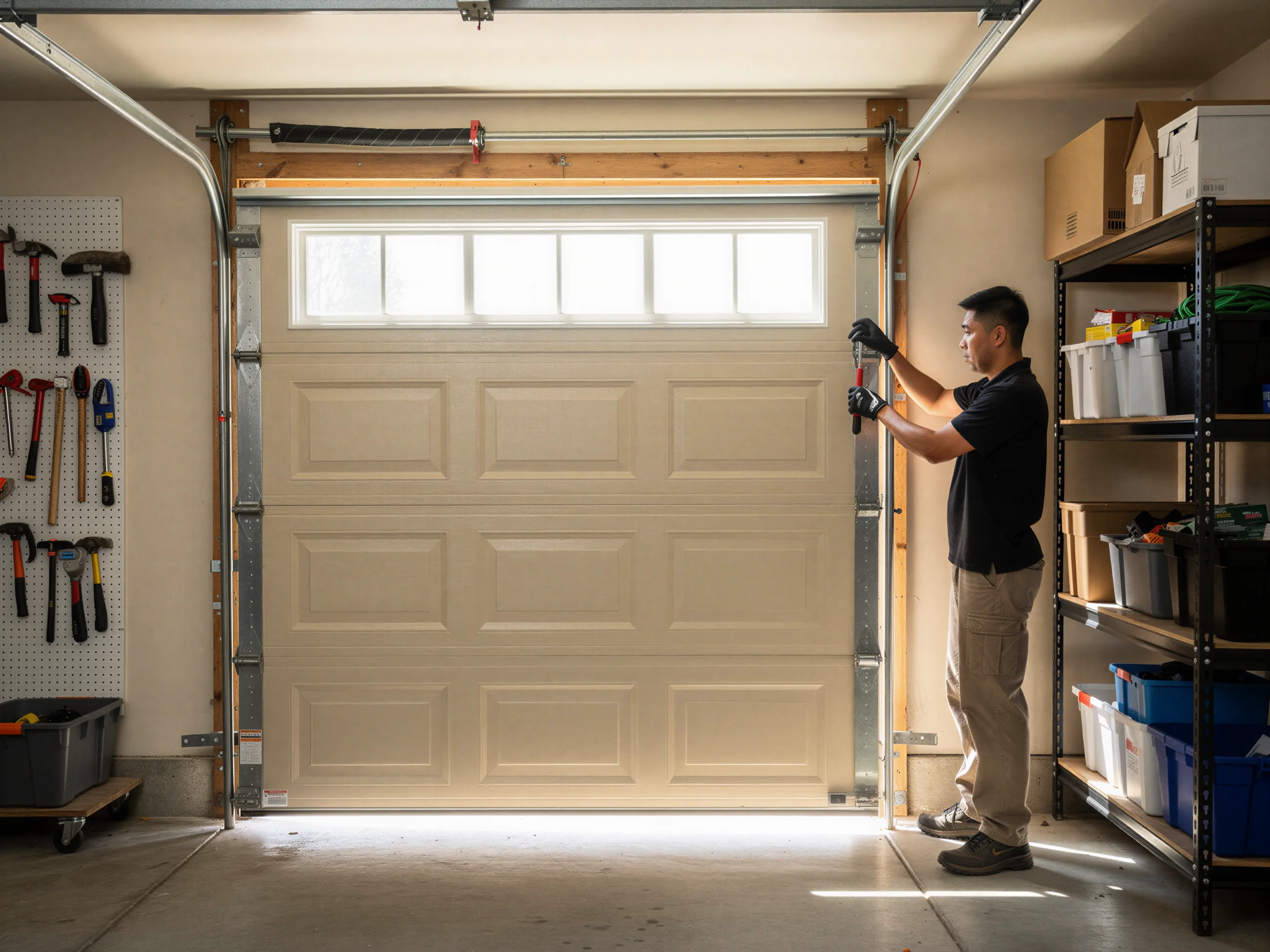
A door that's hopped the track on one side, but hasn't come down, is sometimes something you can push back into the rail by hand - if the spring is still under even tension and the cable hasn't come off the drum.
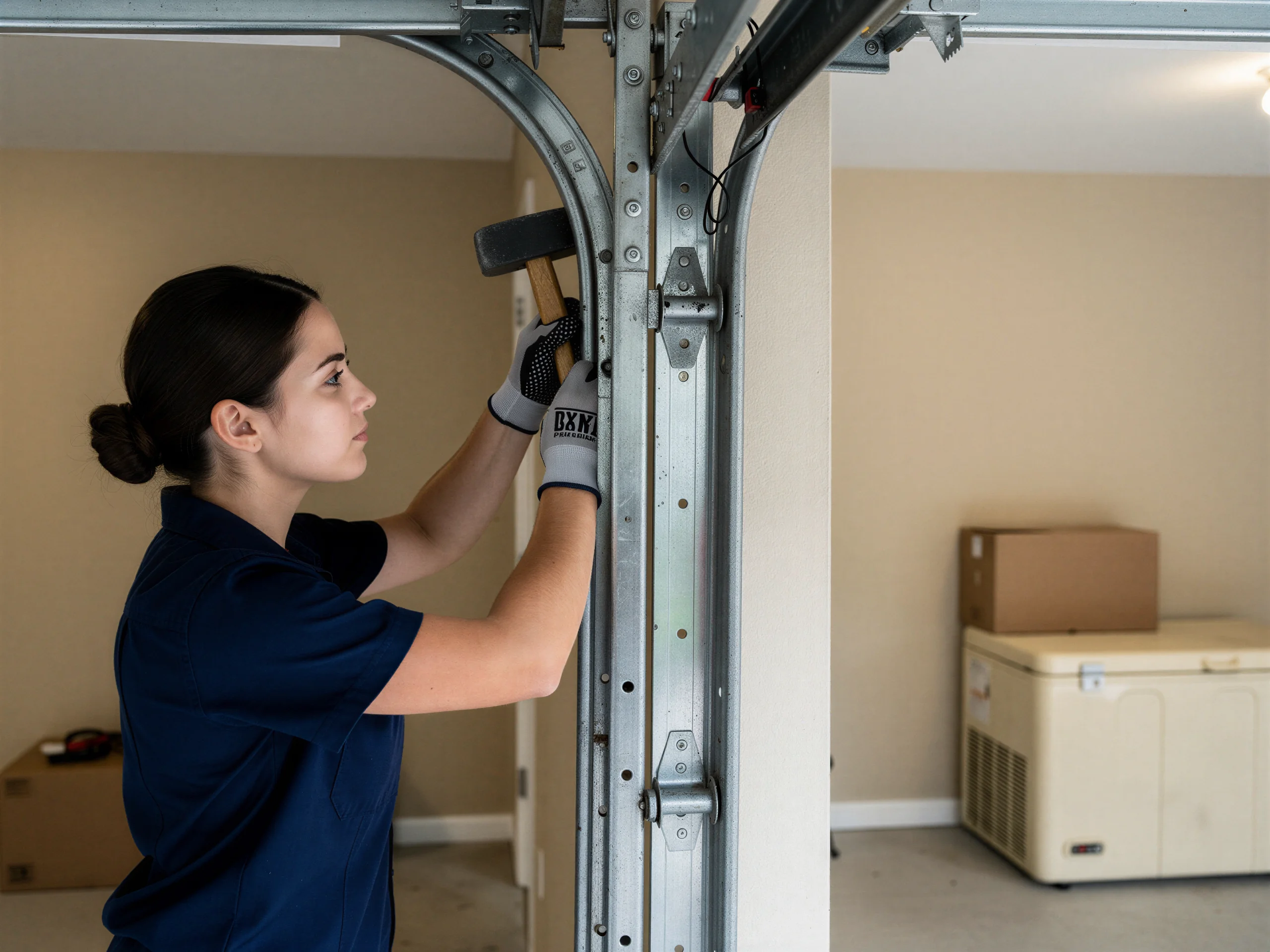
That's the limit of what's safe without a bar and clamps. What you shouldn't do is force a door back onto the track while the opener is still trying to run it.
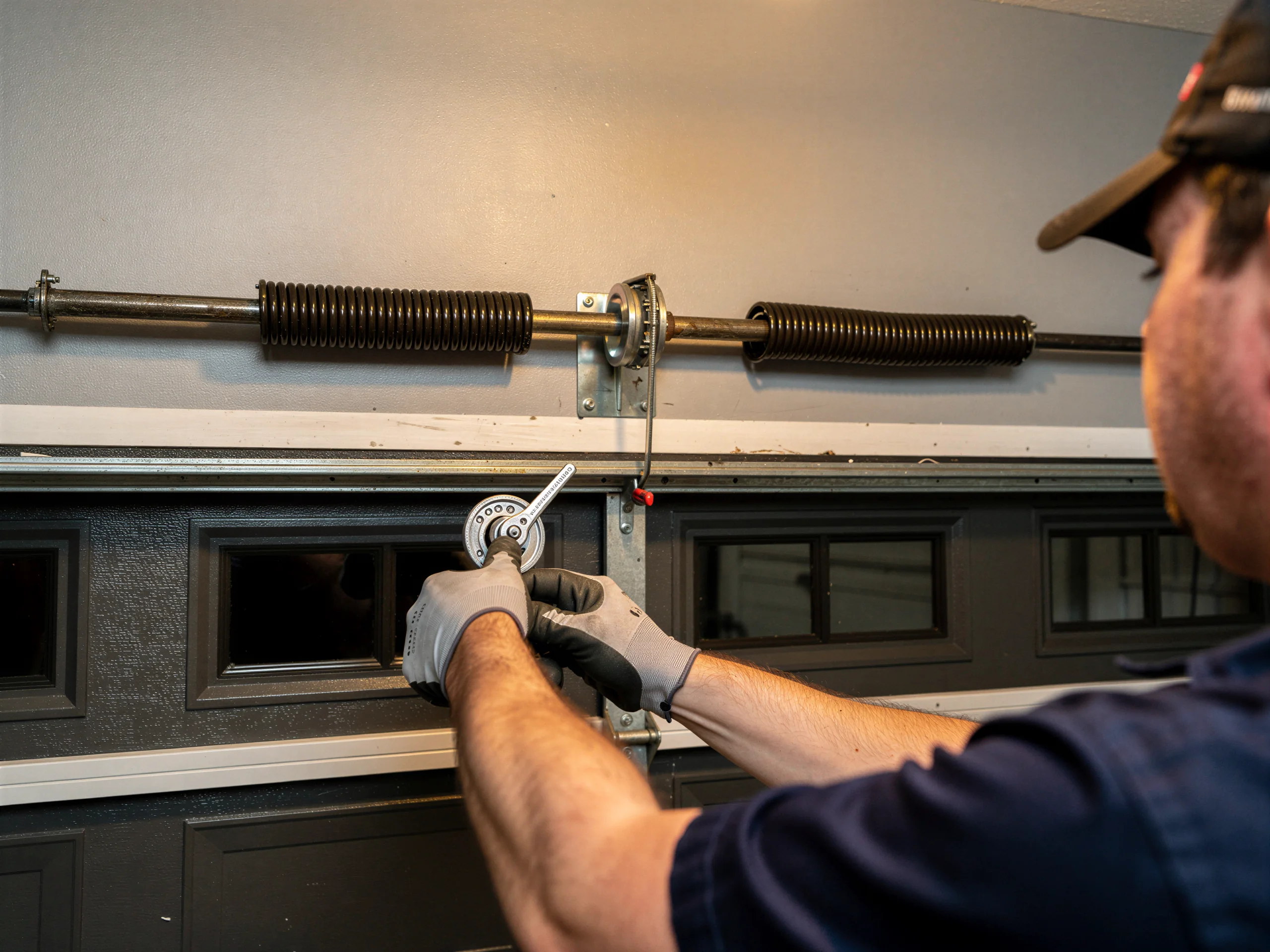
In a two-car garage with a standard torsion spring setup - which is what came standard in most of the builds from the early 2000s around here - the spring is holding real weight, and a door that's off-track usually means a bent track, a snapped cable, or a roller that's worn through its bearing. None of those fix themselves by muscle.
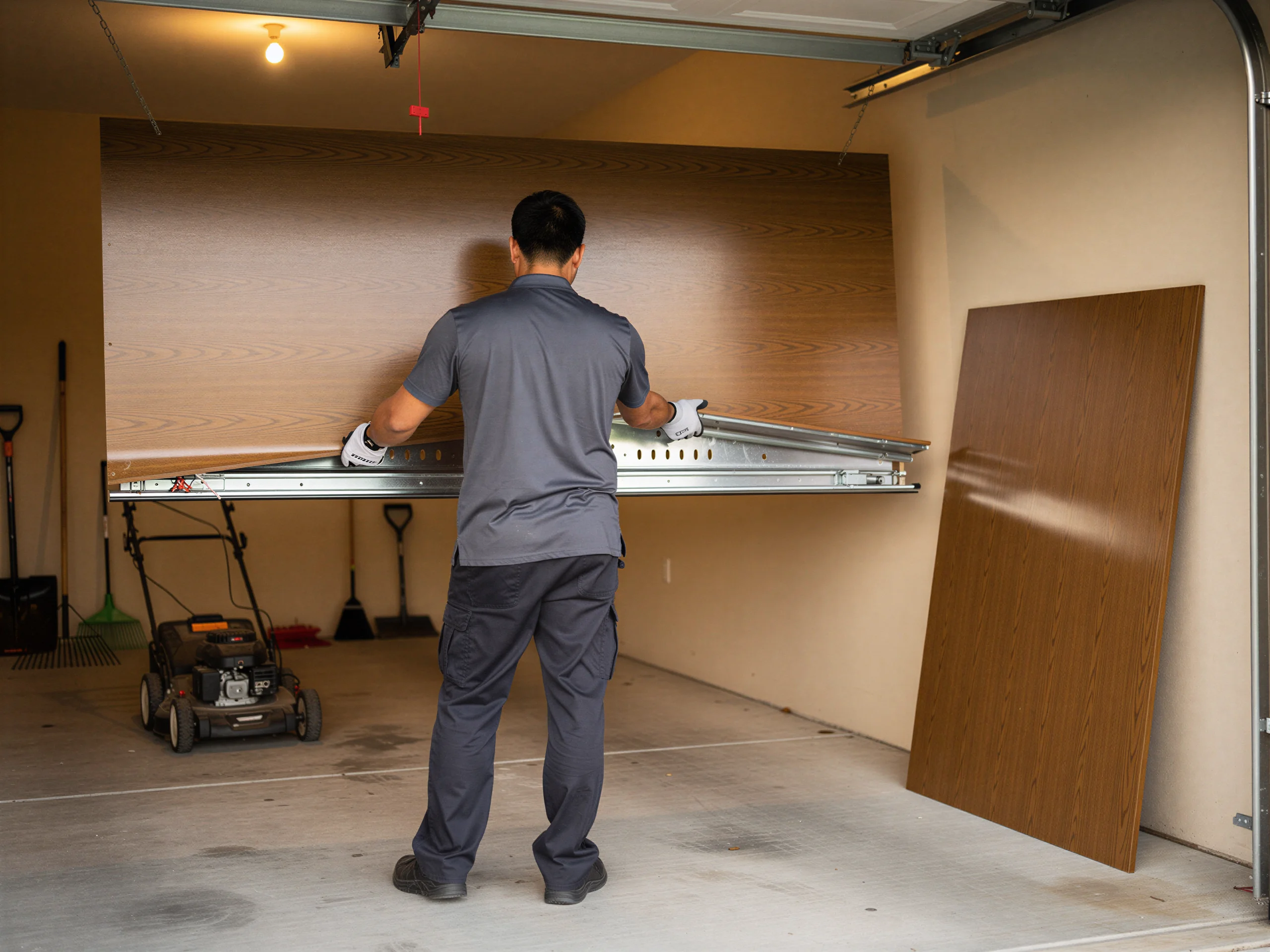
If the door is only a finger's width off the rail and still moves freely, you can often re-seat it yourself with the opener unplugged. If it's hanging at an angle or the track is visibly bowed, that's a call, not a project. We'd rather you ask first than find out the hard way what a double door weighs when it comes free.
Watch-outs
The tracks on a 2004-era double door are galvanized steel, bolted to the frame, not welded - and over twenty years those bolts work loose from heat cycling.
Four Corners sits in a moderate-heat climate band, which means the aluminum and steel in these tracks expand and contract through the summer without the extreme swings you'd get further north, but it's still enough movement over two decades to shift a track bracket a quarter inch off plumb.
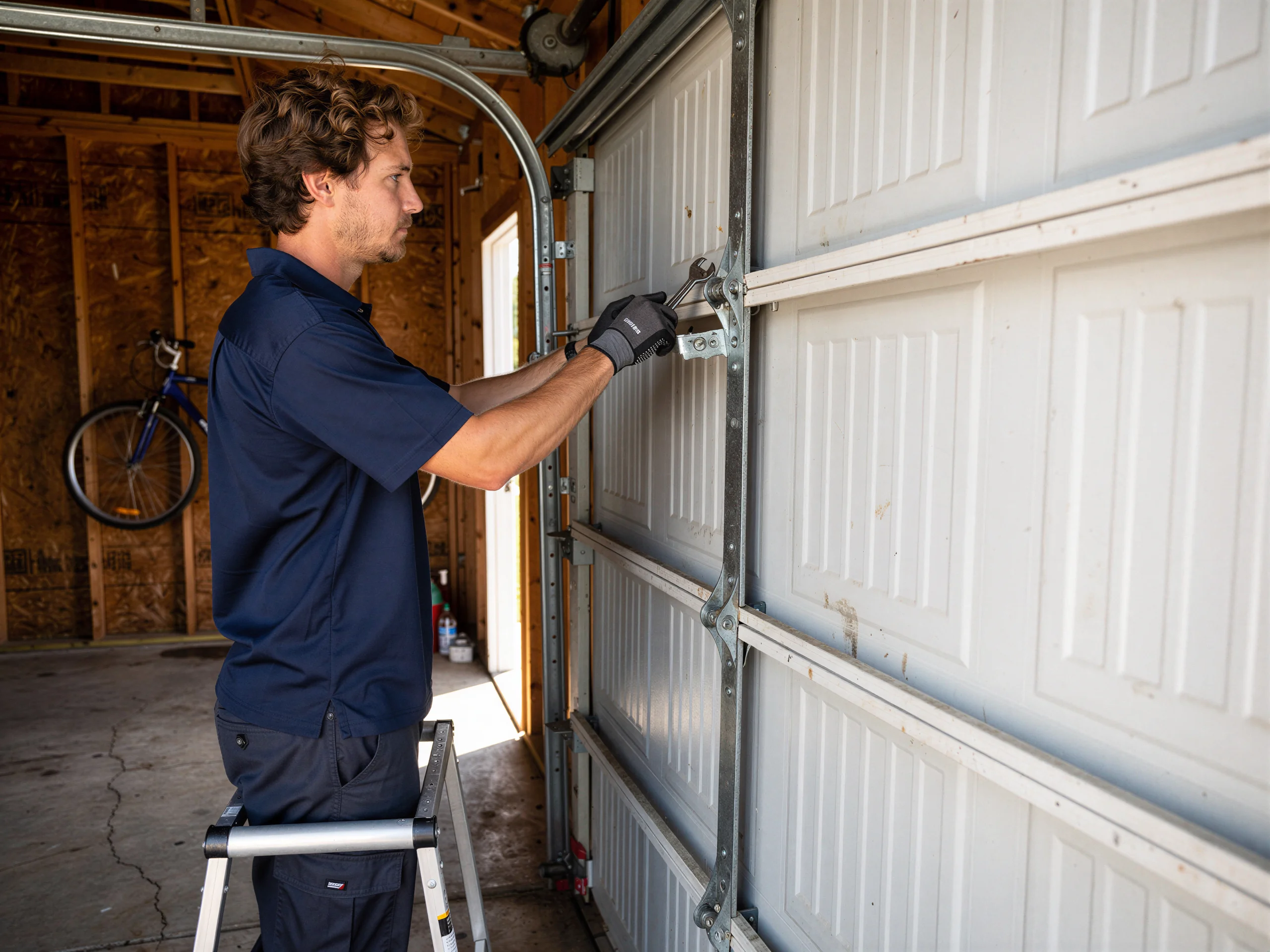
That's usually the root cause when a roller walks off the rail on a door that's never been hit by a car. The other common cause is a roller itself - the stock nylon rollers from that building era wear out from the inside, and once the bearing seizes, the roller stops turning and starts dragging, which pulls the door sideways in the track instead of straight up.
What doesn't usually happen here: track failure from a direct impact. Most of what we find off-track in this part of the service area is wear, not collision - which matters because wear is a repair, and impact is often a replacement.
Pricing
We don't have a flat number for off-track repair we can quote without seeing the door - a bent track section runs different money than a roller swap, and a door that's been forced back on wrong by hand sometimes needs more than either. What we can tell you is how this area tends to shake out: household income across the broader service area sits at a median of $72,853, and most of the doors we're called to here are twenty years old at most, not forty, so the repair is more often hardware - track, roller, cable - than a full door replacement.
That's a different math than it is on older housing stock. A door built in the 1970s or 80s with an off-track problem is more likely sitting on hardware that's simply at the end of its life, where a repair just delays a replacement by a season. A 2004 door with a bent track is usually just that - a bent track.
For the full range of what a shop like ours handles day to day, including pricing that isn't specific to a single fault, see the main off-track repair page for Richmond.
Questions
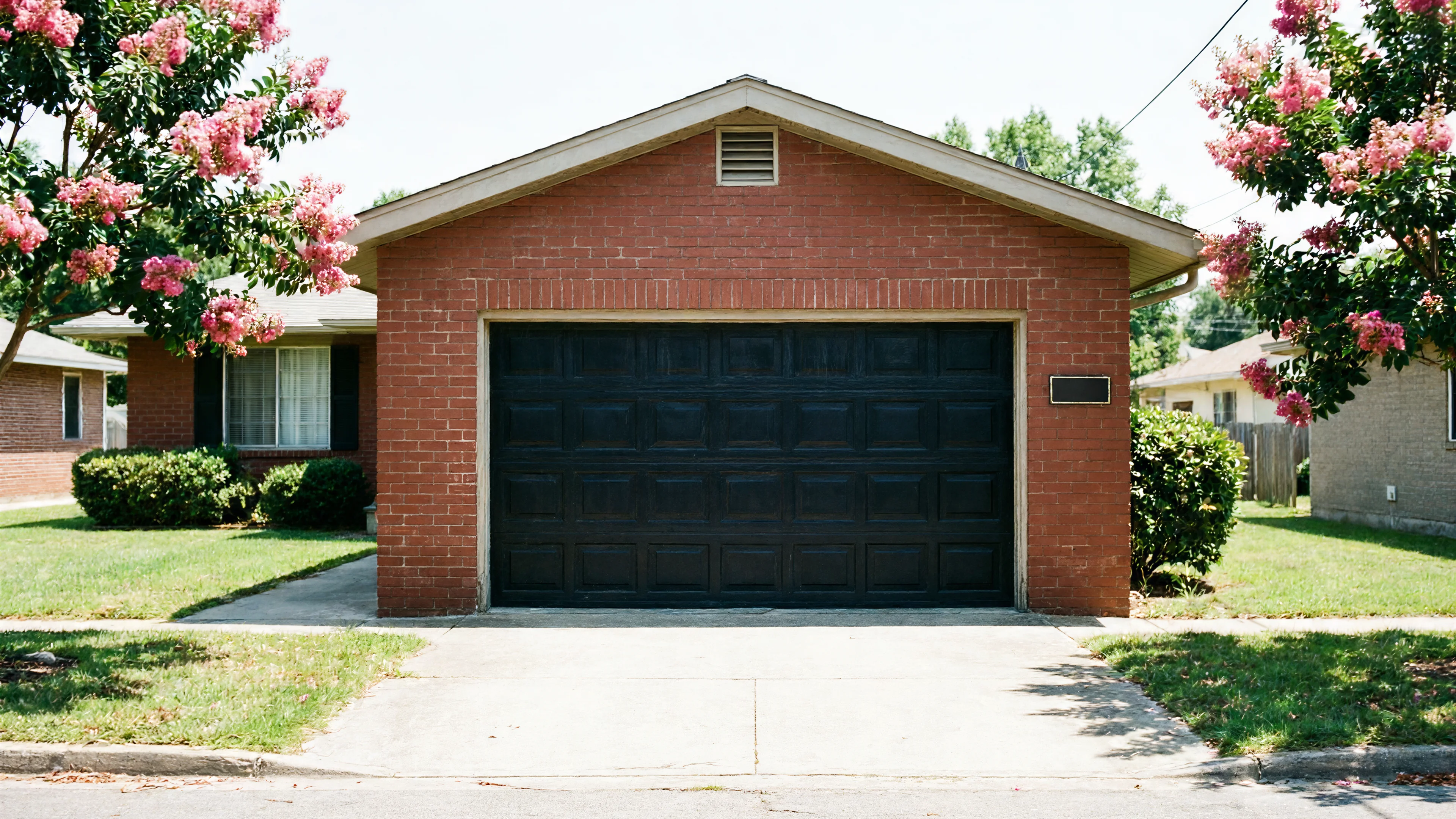
Most of the doors we see here date to around 2004, and the stock nylon rollers from that era wear out at the bearing after two decades of use. Once a roller seizes, it drags instead of rolling, pulling the door sideways. Heat cycling can also work the track bolts loose over time, even in our moderate climate band.
Usually not if the door is from the early 2000s building boom that filled this area - those doors are newer than the service area's median build year of 1987, so the panels and frame are often still sound. A bent track or worn roller is typically a repair, not a reason to replace the whole door.
No. We run out of Richmond, about nine miles away, and drive out for calls here, including Bridlewood Estates five miles southeast of Four Corners. There's no local branch, so the call time includes that drive.
Only if it's barely off the rail, still moves freely by hand, and the opener is unplugged. If the track looks bowed or the door hangs at an angle, that usually means a bent rail or a failed roller bearing, and forcing it back risks the door coming off the track entirely.
Explore more
Ready when you are
Richmond Garage Door Pros repairs and installs garage doors, springs and openers in Richmond, TX and the surrounding area.